Advisory Engagement
Consulting Case Study
Consulting Vaibhav Sharda on AI prompting, business vision, and semantic SEO. The product: perfectly optimized SEO content at scale.
Autoblogging.ai

- Client
- Vaibhav Sharda
- Sector
- AI Content SaaS
- Engagement
- Advisory
- Timeline
- 18 months
+1,200%
Revenue over the engagement
Focus
AI prompting and engineering, output quality, business strategy, and semantic SEO writing principles.
N°1
What Was Autoblogging.ai Trying to Solve?
Autoblogging.ai set out to generate SEO content that actually ranks, not just content that reads well. When Vaibhav Sharda brought me in, the AI-writing market was flooded with tools producing fluent but generic text that Google could spot and discount on sight.
The product already had traction and a fast-growing user base. The risk was the one every AI-content tool eventually hits: as models commoditize fluency, the only durable moat is output that respects how search evaluates expertise. Vaibhav wanted that moat engineered into the platform, not bolted on after the fact.
N°2
Where Did I Come In as an Advisor?
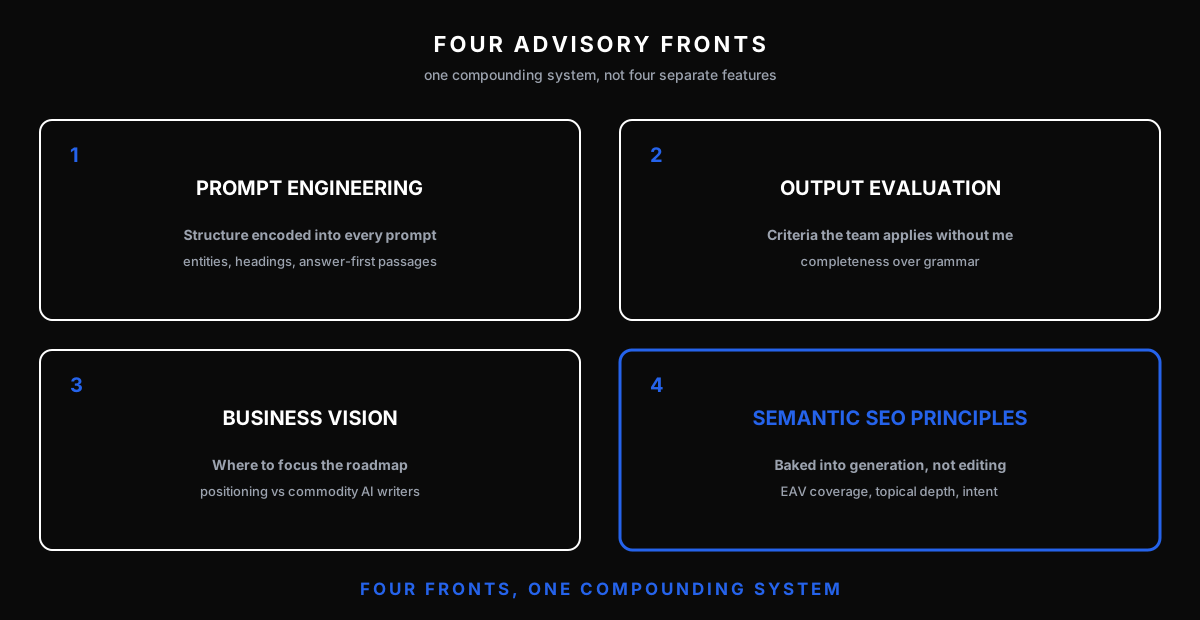
I advised Vaibhav on four interconnected fronts: AI prompting and prompt engineering, AI output evaluation, business vision, and the semantic SEO principles of writing. Each front fed the others, so the platform improved as a system rather than one feature at a time.
I was an advisor, not the operator. The team built and shipped. My job was to make sure what they shipped was aimed at the right target and judged against the right bar.
N°3
How Do You Engineer Prompts for SEO-Grade Content?
Engineering prompts for SEO-grade content means encoding structure, not topics. I had the model respect entity coverage, question-led headings, extractive answers, and intent alignment, so output matched how Google evaluates expertise rather than simply reading fluently.
Most prompts ask for a topic and a word count. That produces text. I built prompt architectures that carried the scaffolding of strong SEO writing: explicit entities and attributes to cover, a heading vector that maps to real queries, and answer-first passages a search engine can extract. The model stopped guessing what good looked like, because good was specified.
N°4
How Do You Tell Good AI Output From Great AI Output?
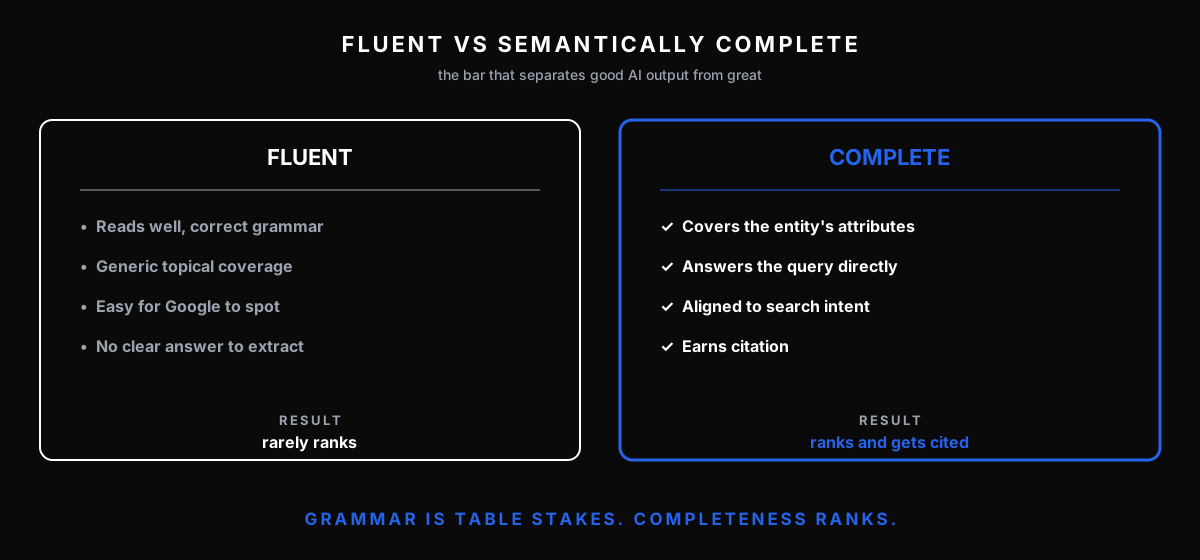
Great AI output is judged on semantic completeness, not grammar. The test is whether a piece covers the entity's required attributes, answers the real query directly, and earns citation. Fluent-but-shallow text fails that bar every time.
I gave the team evaluation criteria they could apply without me in the room: does the piece fill the frame, cover the entity's attributes, lead with the answer, and align to intent? Grammar was table stakes. The real question was whether the content deserved to rank.
“Competitors generated text. We engineered a system that generated content optimized for how search actually works.”
N°5
Which Semantic SEO Principles Got Baked Into the Pipeline?
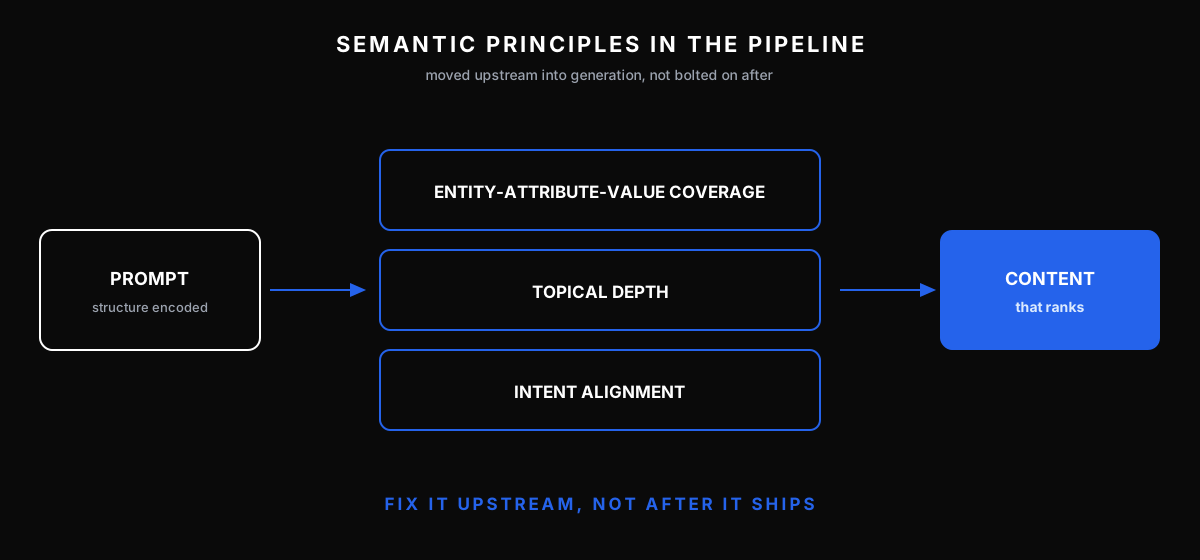
The pipeline carried Entity-Attribute-Value coverage, topical depth, and intent alignment by default. These are the principles I learned directly from Koray Tuğberk Gübür, and they are what let generated content read as expertise rather than filler.
Instead of treating semantic SEO as an editing step, we moved it upstream into generation. Every piece inherited entity coverage and topical structure from the start, which is far cheaper and more reliable than fixing thin output after it ships.
N°6
What Strategic and Roadmap Calls Mattered Most?
Beyond the content engine, I weighed in on product vision: where to focus the roadmap, how to position against commodity AI writers, and which quality investments would compound. The differentiator was never volume. It was content that survives contact with search.
We kept returning to one question: what can this product do that a generic model wrapper cannot? The answer was disciplined, search-aware output at scale, and the roadmap followed from there.
N°7
What We Shipped
- Prompt architectures that produced structurally sound, entity-rich content
- Semantic SEO frameworks baked into the generation pipeline
- Output quality criteria the team could evaluate against
- Strategic input on positioning, product roadmap, and go-to-market
- Ongoing review cycles as the platform evolved
N°8 / Result
+1,200%
Revenue · Six-figure investment
The product hit a quality bar most AI content tools never reach. Autoblogging.ai’s revenue grew by 1,200% over the engagement, and the platform secured a six-figure investment on the back of that growth. The differentiator was simple: while competitors generated text, Autoblogging.ai generated content that was optimized for how search actually works.
FAQ
Questions About This Engagement
It can, but only when it is engineered for semantic completeness. Fluent text alone does not rank. Content that covers an entity's attributes, leads with the answer, and aligns to intent does. That distinction was the whole point of the engagement.
The semantic SEO principles built into generation. While competitors optimized for fluency and speed, Autoblogging.ai produced structurally sound, entity-rich content aimed at how Google evaluates expertise, which is a far more durable moat as models commoditize.
On this engagement I advised. Vaibhav Sharda and his team built and shipped Autoblogging.ai. My role was prompt engineering, output evaluation, business strategy, and the semantic SEO principles that made the output rank.
The Topical Authority methodology I learned directly from Koray Tuğberk Gübür: Entity-Attribute-Value modeling, topical coverage, and intent alignment. It is the same operating system I bring to every engagement, AI product or not.
Work With Me
Want this kind of strategic input?
Work With Me. We'll diagnose where rankings are stuck and what it would take to fix it.