A technical SEO consultant is the person you call when a website is built well enough to rank and still does not. I have run this diagnosis on migrations, JavaScript rebuilds, and templated sites with millions of URLs, and the pattern repeats: the crawl data already contains the answer, and the scarce skill is reading it correctly. This is an Advisory piece, so I am writing it from the buyer's chair. The question is not what technical SEO is. The question is how to tell a real consultant from someone who runs a checklist.
What Is a Technical SEO Consultant?
A technical SEO consultant is an independent specialist who diagnoses and fixes the crawl, render, index, and site-architecture problems that block a website from ranking, and who owns the decision on what to fix first. The role is diagnostic before it is executional. The value is the judgment, not the task list.
The engagement produces one core deliverable: a prioritized remediation plan, not a raw dump of every issue a crawler flags. A weak audit lists 200 findings and ranks none. A technical SEO consultant reads the same crawl and tells you the three defects suppressing rankings and the thirty you can safely ignore this quarter. That triage is the product.
Koray Tuğberk Gübür frames technical SEO as the cost of retrieval a search engine pays to reach and process a page, and the consultant's job is lowering that cost where it actually constrains the site. Good technical search engine optimization is not more work. It is the right work, in the right order, proven against your own data.
Is a Technical SEO Consultant The Same as An SEO Expert?
A technical SEO consultant is a narrower role than a general SEO expert. An SEO expert advises across content, links, and technical work. A technical SEO consultant owns only the machine-facing layer: how search engines crawl, render, and index a website. The expertise overlaps, but the technical specialist goes deeper on fewer things.
What Does a Technical SEO Consultant Actually Do?
A technical SEO consultant audits how search engines crawl, render, and index a website, isolates the defects that suppress rankings, then hands the team a prioritized fix list. The work spans four stages: crawl, render, index, and rank. A consultant intervenes at whichever stage is leaking, not at all of them by reflex.
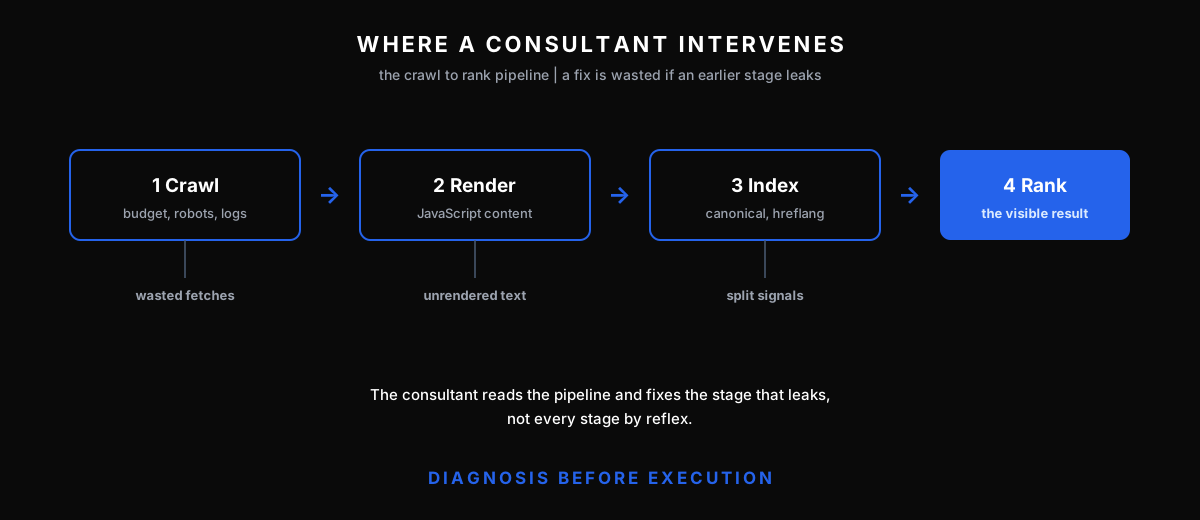
Crawl work covers crawl budget, the robots.txt file, XML sitemaps, and log-file analysis, where I read what Googlebot actually fetched rather than what the sitemap claims exists. Render work covers JavaScript SEO, where content that a browser shows but a crawler never renders is content that does not rank.
Index work covers canonicalization, duplicate content, hreflang, and index bloat, the defects that split or waste ranking signals. Architecture work covers internal linking and the crawl paths that decide which pages get discovered at all. The technical SEO consultant treats these as one pipeline, because a fix at the render stage is wasted if the crawl stage never reaches the page.
What Technical SEO Issues Does a Consultant Audit First?
A consultant audits the technical SEO issues that block indexing before the ones that only refine it. Crawlability and render access come first, because a page a search engine cannot read cannot rank. Core Web Vitals, structured data, and performance tuning come later, once the site is fully indexable.
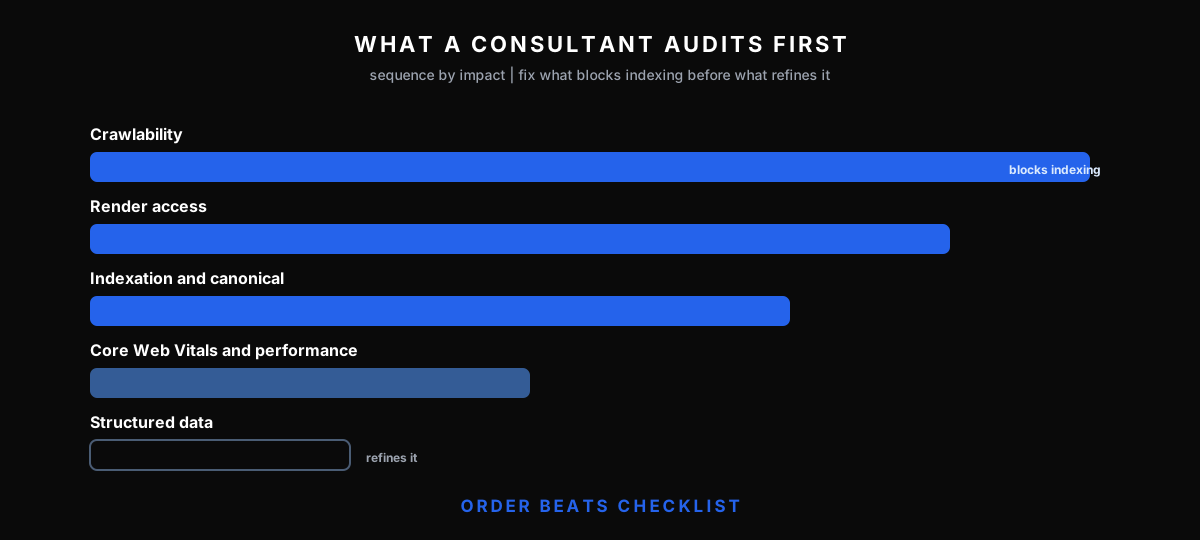
The order matters more than the checklist. Most technical SEO audits list the same twenty issues; a good consultant ranks these technical problems by impact on organic search, so your developers fix the faults that free your top pages first and the cosmetic ones last.
How Does a Technical SEO Consultant Use Google Search Console?
A technical SEO consultant reads Google Search Console as the primary evidence source. The Index Coverage and Page Indexing reports show which pages Google accepts, rejects, and why. That report turns a vague complaint into a specific defect, which is why I request access before quoting any engagement.
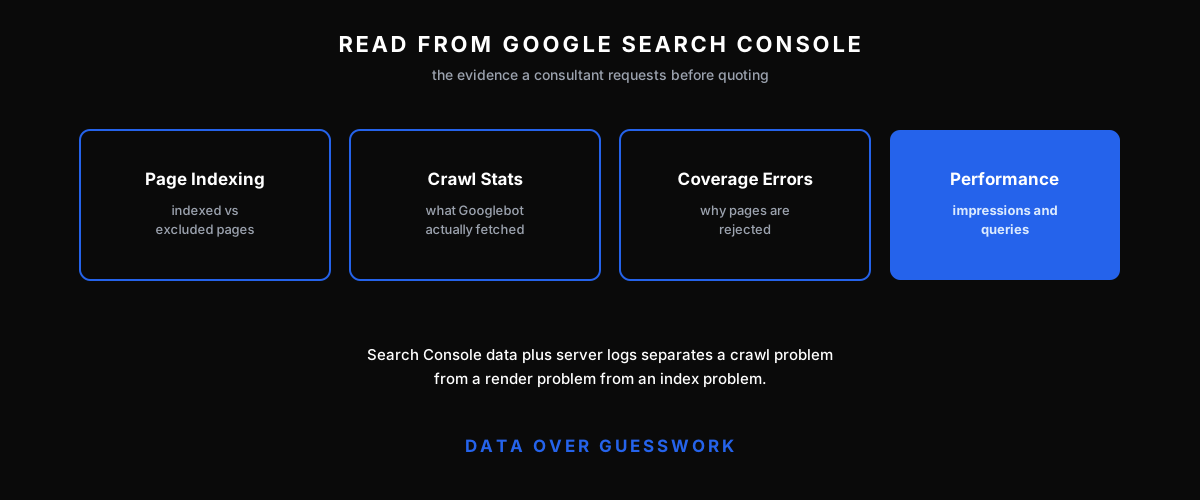
Google search data plus server logs is how a consultant separates a crawl problem from a render problem from an index problem. Without that data, any diagnosis is a guess dressed as expertise.
How Is a Consultant Different from a Technical SEO Agency or Specialist?
A technical SEO consultant sells independent judgment, a technical SEO agency sells pooled execution capacity, and an in-house specialist sells a single continuous skill inside one company. The three solve different constraints. Choosing the wrong one wastes the budget on capacity you did not need.
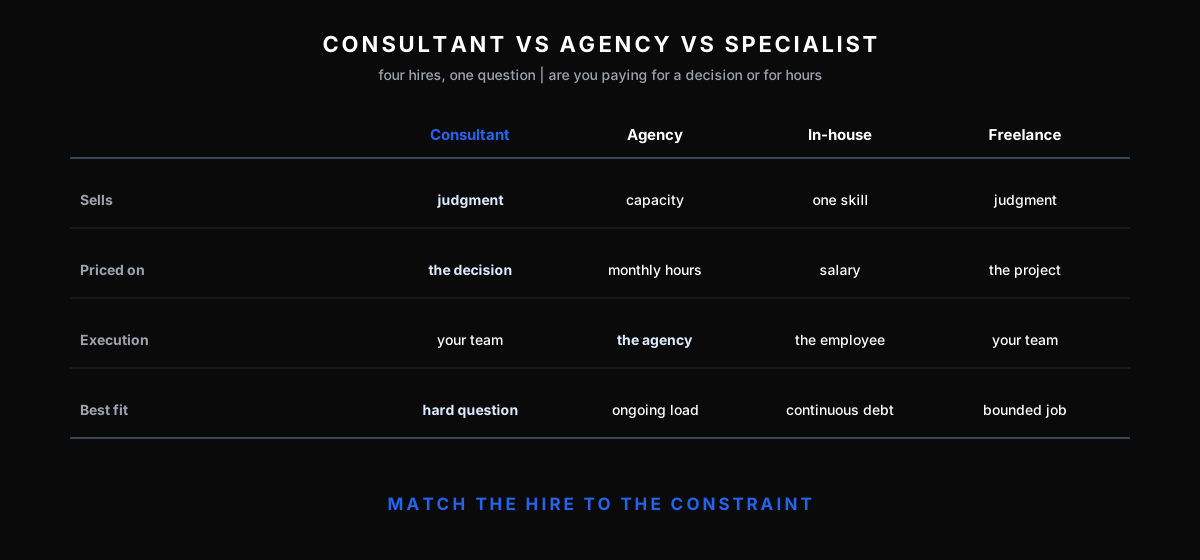
An SEO agency wins when you have a large, ongoing execution load and need staff to run it every month. A consultant wins when you have a hard diagnostic question and need one senior head to answer it, then hand your developers a plan they can run. An in-house specialist wins when the technical debt is continuous and platform-specific enough to justify a full-time hire.
A freelance technical SEO consultant is the same diagnostic role as the consultant, packaged solo and project-based rather than through a firm. The distinction that matters to a buyer is simple: are you paying for a decision or for hours? A consultant is priced on the decision.
Technical SEO Consultant vs SEO Agency: Which Delivers Better?
A consultant delivers better diagnosis; an agency delivers better throughput. One senior consultant will out-diagnose an agency's junior team on a hard technical problem. An agency will out-execute a lone consultant on a large backlog of routine SEO services. Match the choice to whether your bottleneck is thinking or doing.
When Do You Actually Need a Technical SEO Consultant?
You need a technical SEO consultant at trigger events: a site migration, a replatform, a JavaScript rebuild, a sudden indexation drop, or a large templated site where crawl waste is invisible without log analysis. Outside those events, the honest answer is often that you do not need one yet.
Migrations are the highest-stakes case, because a botched URL migration erases ranking signals that took years to earn, and the damage is cheapest to prevent before launch. Replatforming to a headless or JavaScript-heavy stack is the second, because render defects hide until traffic falls.
Indexation collapse is the third, where pages drop out of the index and no one on the team can say why. Large templated sites are the fourth, where the same defect repeats across a million URLs and small percentages become large losses. If your website is a 30-page brochure on WordPress with no traffic problem, a technical SEO consultant is not your bottleneck, and I will tell you so rather than take the engagement.
Which Websites Need a Technical SEO Consultant Most?
Large, dynamic, and recently rebuilt websites need a technical SEO consultant most. E-commerce catalogs, JavaScript single-page apps, and multi-language sites accumulate crawl and index errors at a scale where manual review fails. Small static websites rarely have technical SEO issues worth a specialist's fee.
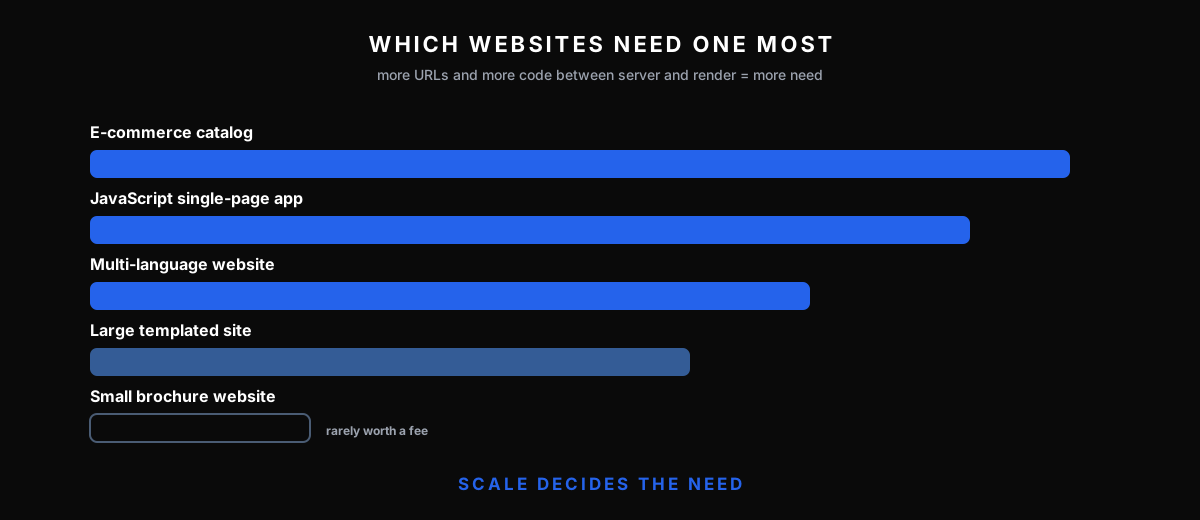
The rule I give clients: the more URLs a search engine has to crawl and the more code stands between the server and the rendered page, the more a technical consultant earns back the fee. A brochure site does not clear that bar; a marketplace with faceted navigation clears it easily.
How Do You Evaluate a Technical SEO Consultant?
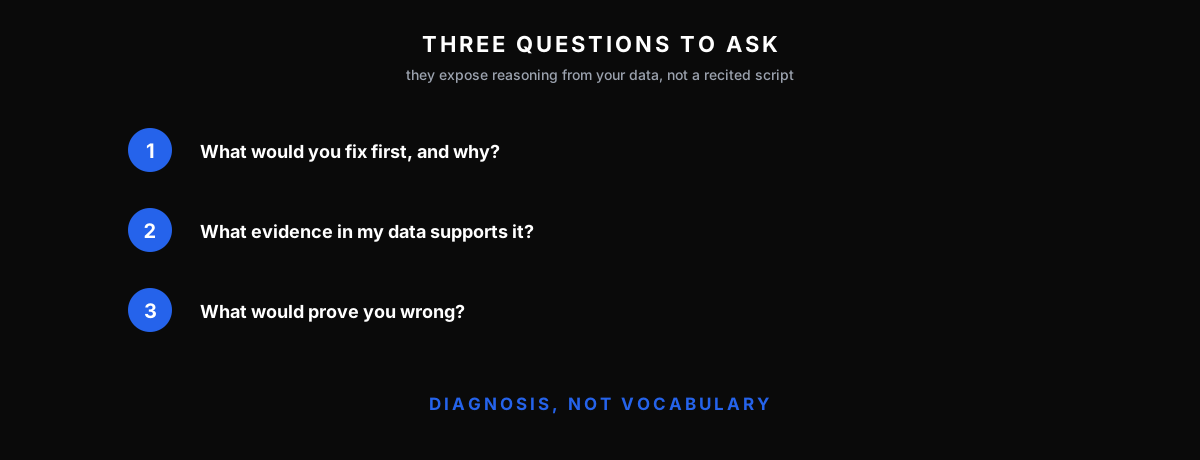
Evaluate a technical SEO consultant by diagnosis, not vocabulary. Ask them to open your live website in the meeting and name the first defect they would fix and why. A real consultant reasons from your crawl data in real time. A weak one recites a generic checklist that would fit any site.
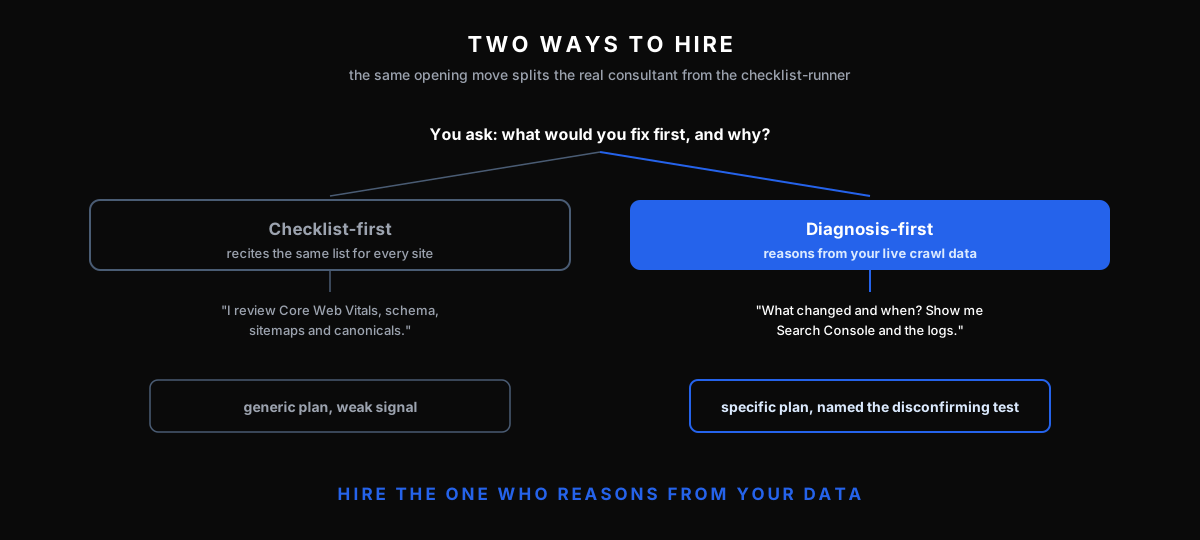
The tell is checklist-first versus diagnosis-first. A checklist-first candidate promises to review Core Web Vitals, schema, sitemaps, and canonicals, the same list for every client, because the list is the product. A diagnosis-first candidate asks what changed and when, requests analytics and log access, and forms a hypothesis before quoting.
I judge the second question harder than the first: after they name a defect, ask what evidence would prove them wrong. Someone who can state the disconfirming test understands the mechanism. Someone who cannot is pattern-matching. The buyer-side skill here is refusing to be impressed by fluency in technical vocabulary, which is cheap, and holding out for reasoning from your specific data, which is not.
What Questions Should You Ask a Technical SEO Consultant?
Ask a technical SEO consultant what they would fix first, what evidence supports it, and what would prove them wrong. Those three questions expose whether the person reasons from your data or recites a script. Follow up by asking which technical SEO issues they would deliberately ignore, because a consultant who fixes everything prioritizes nothing.
What Does a Technical SEO Consultant Cost?
A technical SEO consultant is priced by engagement model: a one-off audit, a fixed-scope project, a migration sprint, or a monthly retainer. The price reflects the seniority of the judgment, not the page count. What you are buying is triage that prevents six-figure mistakes, so the frame is risk avoided, not hours billed.
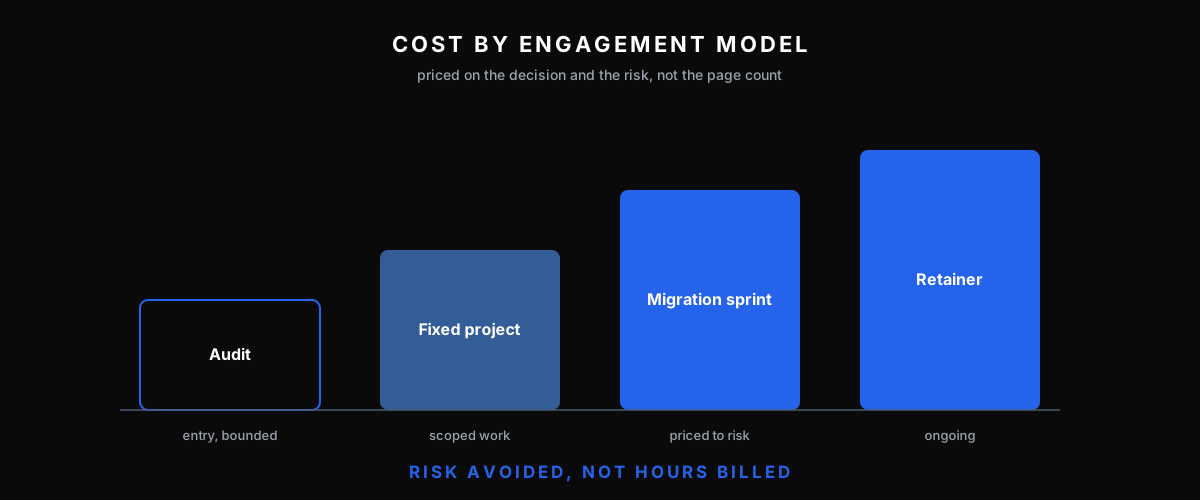
A standalone technical audit is the entry model, scoped to a diagnosis and a prioritized plan your team executes. A migration engagement is priced to the risk of the migration, because the cost of getting it wrong dwarfs the fee. A retainer fits sites with continuous technical change, where a consultant stays on to catch regressions.
I will not publish invented figures here, because pricing that ignores your stack, scale, and stakes is marketing, not advice: [Bart: confirm typical audit / project / retainer ranges you want shown, or leave this as a "priced per engagement" statement]. The question to ask a consultant is not the day rate. It is what decision the fee buys and what a wrong decision would have cost.
What Does a Technical SEO Audit Cost?
A standalone technical SEO audit is priced to the size and complexity of the website, not to a fixed rate. A small site audit is a bounded piece of research; an enterprise audit with log analysis and a render study is a larger project. What you pay for is the prioritization, because a list of technical SEO issues without an order of operations is worth little.
What Problems Does a Technical SEO Consultant Fix?
A technical SEO consultant fixes crawl budget waste, render-blocked content, canonical and duplicate content chaos, migration traffic loss, index bloat, and broken internal-link architecture. Each is a defect that suppresses rankings a site has otherwise earned through content and links.
Crawl budget waste is a search engine spending its fetches on parameter URLs and dead paths instead of the pages that earn organic traffic. Render-blocked content is text a reader sees and a crawler never gets, common on JavaScript frameworks. Canonical chaos is ranking signals split across duplicate URLs that should consolidate to one.
Migration loss is signals stranded on old URLs that never redirected. Index bloat is thin or duplicate pages diluting the site's overall quality signal. Broken architecture is important pages buried too many clicks deep to be crawled well. A technical SEO consultant does not create demand by fixing these. The consultant removes the technical reasons a site underperforms the demand it already has.
How Does a Consultant Fix Crawl and Index Errors?
A consultant fixes crawl and index errors by controlling what search engines reach and keep. The robots.txt file and internal linking steer the crawl toward pages that matter; canonical tags, redirects, and noindex directives control what stays in the index. The work ensures a search engine spends its crawl budget on pages that earn results.
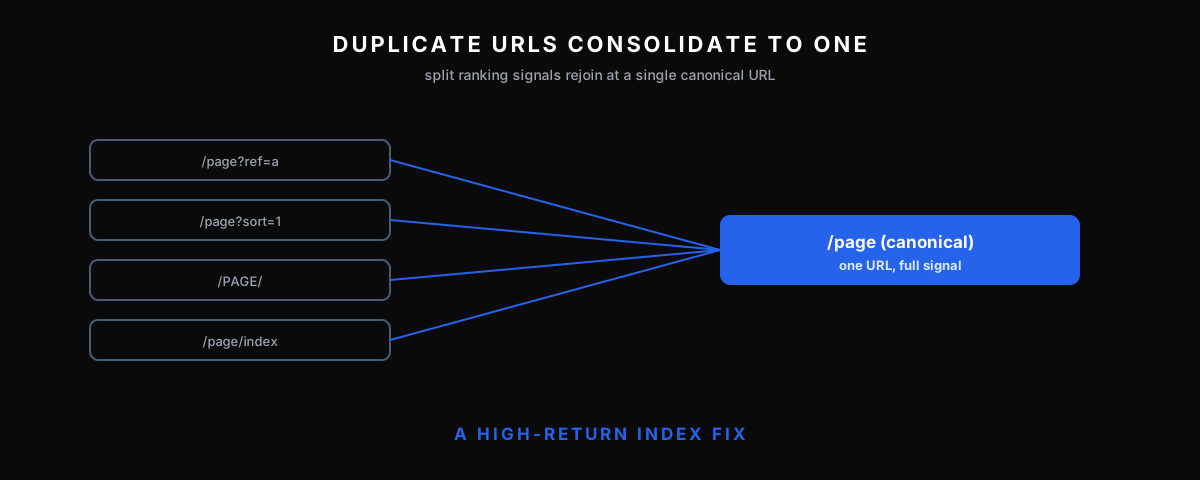
Most index problems trace back to duplicate content: the same page reachable at many URLs, each competing with the others. Consolidating them to one canonical URL is among the highest-return fixes a technical SEO consultant delivers.
What Results Should You Expect, and When?
Expect a technical SEO consultant to remove ceilings, not to manufacture growth. The audit lands in weeks; the results follow only after your developers ship the fixes, because execution is gated by your developers, not the consultant. Technical work is necessary and rarely sufficient on its own.
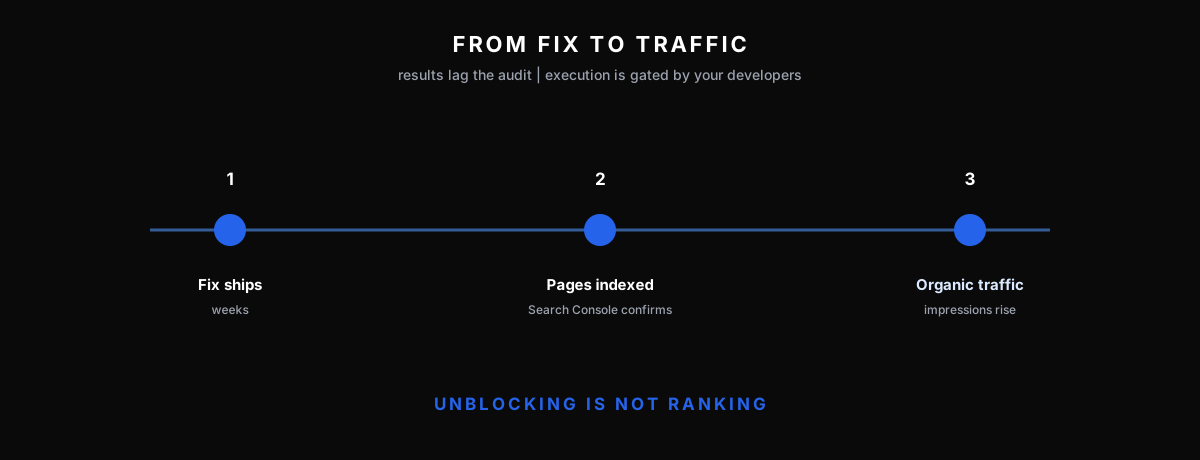
The honest sequence is this: unblocking is not the same as ranking. Fixing render access lets Google finally read a page, but content and authority still decide where it ranks. On a migration, a clean job shows up as an absence, the organic traffic you did not lose.
On a crawl-waste fix, results appear as previously buried pages getting indexed and gaining impressions and clicks. I set the expectation early that a technical SEO consultant raises the ceiling on what content and links can achieve, and that a site with neither will see technical fixes change little. This is where technical work meets meaning, and why I connect it to semantic SEO: crawl and render decide whether a search engine can reach your page, and semantics decide whether it understands it.
How Do You Measure a Technical SEO Consultant's Results?
You measure a technical SEO consultant's results in indexation, crawl efficiency, and organic traffic to previously blocked pages. Watch the index report for pages moving from excluded to indexed, and watch server logs for crawl budget shifting to revenue pages. Performance metrics like Core Web Vitals confirm the site is healthy, but indexation is the real scoreboard.
Should You Hire a Freelance Technical SEO Consultant or An in-House Hire?
Hire a freelance technical SEO consultant when the need is a bounded diagnosis or a migration; make an in-house hire when the technical debt is continuous and specific to one platform your team ships to daily. The decision is about duration, not talent.
A freelance technical SEO consultant is project-shaped: sharp for a defined problem, wrong for a permanent seat. The moment the same person is doing routine ticket work rather than senior diagnosis, you are overpaying for a contractor to do a staff job. Conversely, hiring in-house for a one-time migration means paying a salary to solve a problem that ends in a quarter.
I have watched businesses get this backwards in both directions. The clean rule: buy a consultant for the decision and the plan, and hire staff for the daily execution once the plan is set. If you want the plan executed for you rather than staffed internally, that is the line where done-for-you delivery through Mojo Links fits, and where working with me directly fits when you want the diagnosis and the second opinion.
What Expertise Should a Technical SEO Consultant Have?
A technical SEO consultant should combine hands-on search engine optimization experience with enough developer fluency to read code, logs, and rendering behavior. The expertise that matters is diagnostic range: crawling, indexing, JavaScript rendering, site architecture, and site migrations. Certifications signal little; a track record of fixing real technical SEO issues on real websites signals everything.
What Does a Technical SEO Consultant Deliver Beyond The Audit?
Beyond the audit, a technical SEO consultant delivers a prioritized roadmap, developer-ready tickets, and the research that ties technical fixes to business results. The best consultants ensure every recommendation maps to organic search results, not vanity metrics, and they frame the work as a long term optimization strategy rather than a one-off cleanup.
Good technical SEO services deliver more than a report. A consultant translates findings into a small number of high-impact tickets, connects them to the keyword research and the queries your business actually wants to win, and stays close enough to verify the fixes shipped. A technical SEO consultant usually sits inside a broader digital marketing program, but unlike the rest of that digital effort, the work is judged on one thing: whether Google can crawl and index your top revenue pages. That is the difference between technical SEO services that generate a PDF and a consultant whose experience moves search results. A senior consultant brings years of hands-on experience with migrations, crawling, and rendering, and that experience is what you are really buying.
A strong technical SEO engagement also protects your top pages and top rankings, the ones you already earned, and turns a backlog of technical debt into a long term optimization strategy. Optimizing crawl paths, consolidating duplicates, and fixing render access is a strategy your business compounds on, not a one-time expense. This is where a technical SEO strategy and steady technical SEO services meet: the strategy names the priorities, and the services ship them for your business.
Frequently Asked Questions About Technical SEO Consultants
Is a Technical SEO Consultant The Same as An SEO Consultant?
No. An SEO consultant advises across content, links, and technical work; a technical SEO consultant specializes in the crawl, render, index, and architecture layer. The technical role is the one you call when the website is built well and still will not rank, and a general SEO consultant often subcontracts it.
What Is a Technical SEO Audit Consultant?
A technical SEO audit consultant runs an audit-only engagement: a fixed-scope diagnosis of a website's crawl, render, and index health, delivered as a prioritized plan. Your own team then executes the fixes. It is the entry-point version of the consultant relationship, scoped to the decision rather than the delivery.
How Long Does a Technical SEO Engagement Take?
An audit takes weeks; the full result depends on your developers. The diagnosis and prioritized plan land quickly, but ranking improvements follow only once the fixes ship, and that timeline is set by your team's release capacity, not by the consultant. A migration sprint is scoped to the launch date.
Can One Consultant Replace An SEO Agency?
For diagnosis, yes; for continuous execution at volume, no. A technical SEO consultant answers the hard question and writes the plan, which a single senior head does well. An SEO agency exists to run ongoing execution load across a team. Match the hire to whether you need a decision or sustained capacity.
Do I Need a Technical SEO Consultant If My Website Is on Shopify or Webflow?
Usually only at trigger events. Hosted platforms like Shopify and Webflow handle the crawl and render basics, so a small store rarely needs one. You need a technical SEO consultant when you migrate, scale to thousands of URLs, add heavy JavaScript, or see indexation drop without explanation.