Most so-called SEO strategies are a checklist to tick off: audit, keywords, content, links. I have run SEO for 10 years, remotely from Thailand, and I have seen dozens of those lists. Almost none was a strategy. A strategy is not a list of activities. It is a decision about which of them not to do, and in what order.
What Is An SEO Strategy?
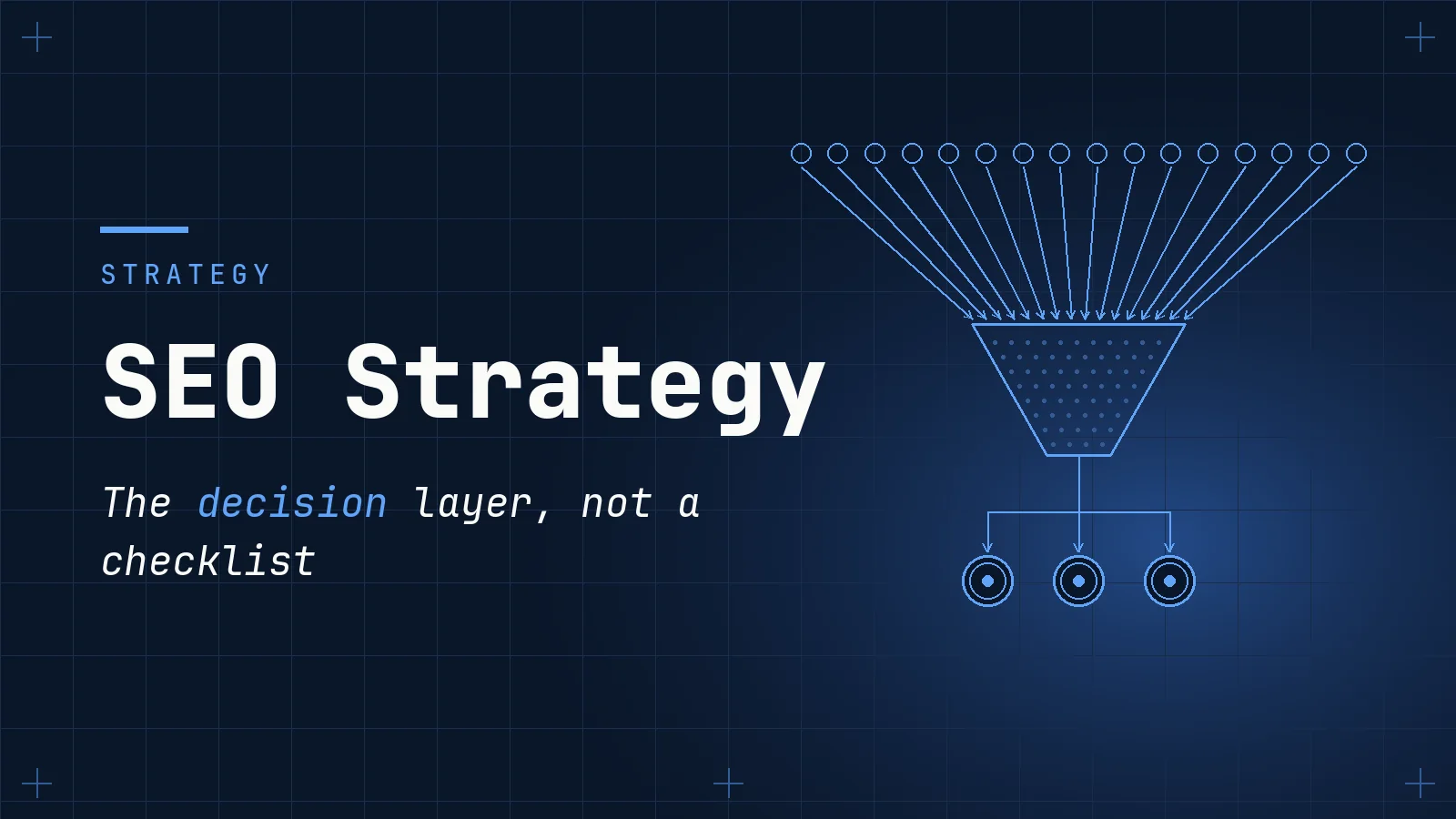
An SEO strategy is a layer of decisions: where revenue leaks in organic search and what to fix first. It is not a list of activities. It is a choice about which actions make sense for a specific website, and which waste budget.
Notice the word "decision". An audit, keyword research, link building and content marketing are tactics, the things you do. A strategy sits one floor above them: it rules which of those tactics matter for your business, in what order, and why this order and not another. Without that layer a team works efficiently, but blind.
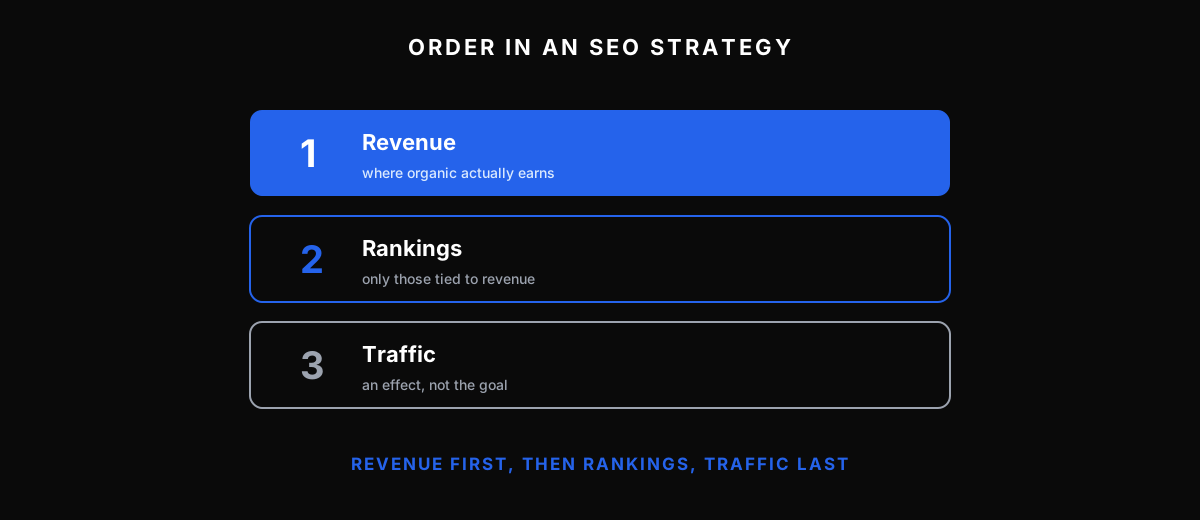
The reference point of a strategy is not rankings in the search results, it is revenue. I ask first where organic traffic turns into money, and only then which queries and pages lead to that money. I work with semantic SEO and topical authority, the method developed by Koray Tuğberk Gübür, and I base decisions on data from Google Search Console, not on a hunch.
How Does An SEO Strategy Differ from Doing SEO?
Strategy decides, execution does. Strategy sets the direction and the order; execution is the ongoing search engine optimization of a website for the search results. Confusing the two means a company buys the work before it even knows what it wants to achieve and why.
Execution answers the question "how do I increase visibility in search engines". Strategy answers the earlier question: will that visibility in the search engine results add revenue at all, and if so, on which pages first. The order is deliberate, because visibility without sales is a cost, not a result.
Why Does a Strategy Start with Revenue, Not Keywords?
Keywords are a map, not a destination. A keyword list tells you where the traffic is, but not where the money is. A strategy starts with revenue, because revenue decides which of those keywords are worth serving with content and optimization at all.
I have seen companies with hundreds of keywords in the top 10 and flat revenue. Traffic grows, the chart in the report looks good, and nothing changes in the bank account. That is exactly the moment when a keyword list turns out to be a map leading nowhere, because nobody asked which queries actually have sales potential.
What Does An SEO Strategy Actually Decide?
An SEO strategy decides three things: where revenue leaks from organic search, in what order to fix problems, and what not to do on purpose. The rest, the audit, keyword research, link building and content, are tactics that the strategy only orders and prioritizes.
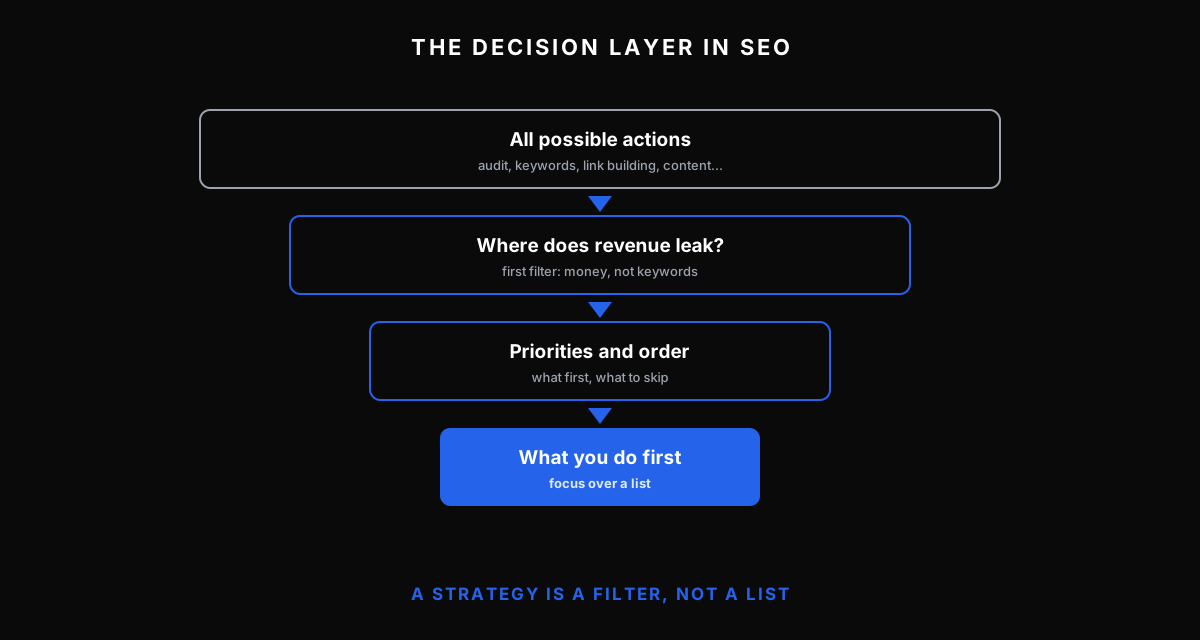
The first ruling is revenue. Before I look at any keyword, I search the data for places where the company already has traffic and still does not earn. This inverts the typical process, which starts from a keyword list. The keyword list is a map, and the destination is the money that map is supposed to deliver.
The second ruling is order. Most SEO problems can be fixed, but not all at once and not all worth fixing. A strategy says what to do this quarter and what to postpone, so that the long-term plan reinforces itself instead of competing for the same budget and the same ranking in the search results.
The third ruling is what to drop. A deliberate cut is part of a strategy as much as a plan of action, because budget spent on the wrong page is budget no longer there for the right one.
Search engines rank pages, not businesses. A strategy decides which pages deserve to win in the search results, because rankings and organic traffic are only the scoreboard. Revenue is the game.
What Data Goes into An SEO Strategy?
I build a strategy on data, not on guesses. The inputs are data from Google Search Console, competitor analysis, market research and on-site traffic, sometimes supported by Ahrefs and Google Analytics. From these sources I read where the business already earns through the website, and where it only collects impressions.
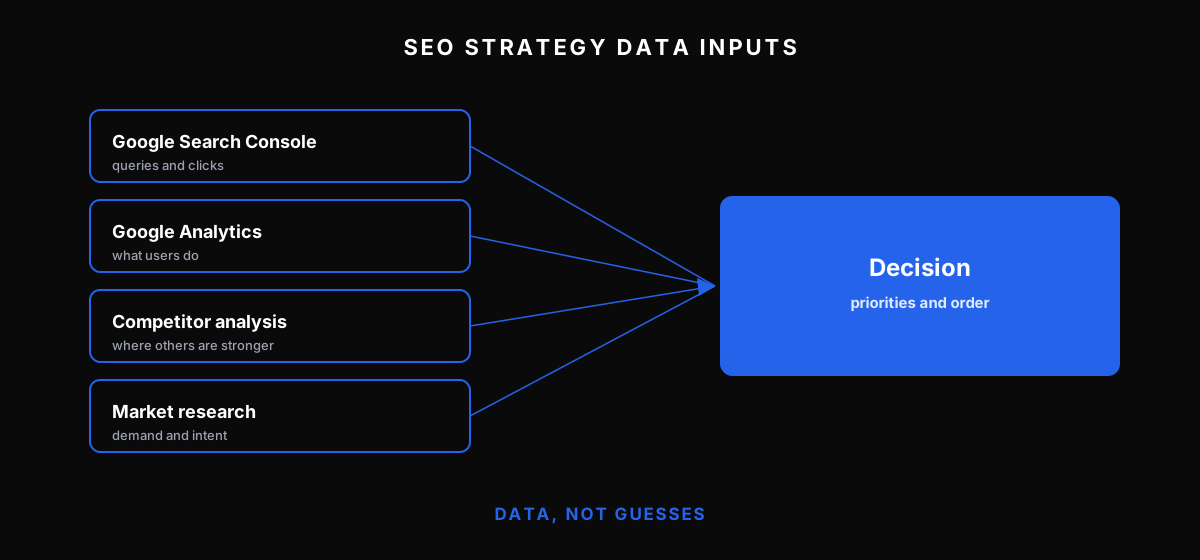
Google Search Console shows which queries the site already appears and clicks for, and Google Analytics shows what users do after they land. Competitor analysis says where others are stronger and what cannot be taken easily. This data decides the priorities, because it shows where optimization will return, and where it will only tire the team.
Along the way I check the structure of the website and its link profile, because even the best quality content will not work if search engines cannot understand how the pages connect. A clean structure lets you build visibility faster and, above all, cheaper, which over time translates into more visibility on the themes that matter. This is still part of the strategy, because I decide which technical SEO elements of the website to fix first.
What Does "Order" Mean in An SEO Strategy?
Order is the cheapest lever in SEO. The same actions done in a different order return very differently, because early wins fund the patience the rest needs. A strategy sets what to do first, so that revenue shows up sooner rather than later.
I start with the pages that sit just behind the first page of the search results and already relate to sales. A small ranking gain on a relevant, high quality page turns into revenue faster than building new content from scratch. Only then do I move into themes that take months to build.
Every stage of this work has a clear goal, and business goals are the reference point for all decisions. It is a process in which a strategy is worth as much revenue as it helps deliver, not as many tasks as get ticked off. So I always order the work toward the goals, and that way the budget works instead of just spinning.
How Does An SEO Strategy Differ from a Checklist?
A checklist says what to do; a strategy says what not to do, and in what order. An audit, keywords and links are tactics. A strategy is the decision about which of them matter for this website and why. That is the difference between a task list and judgment.
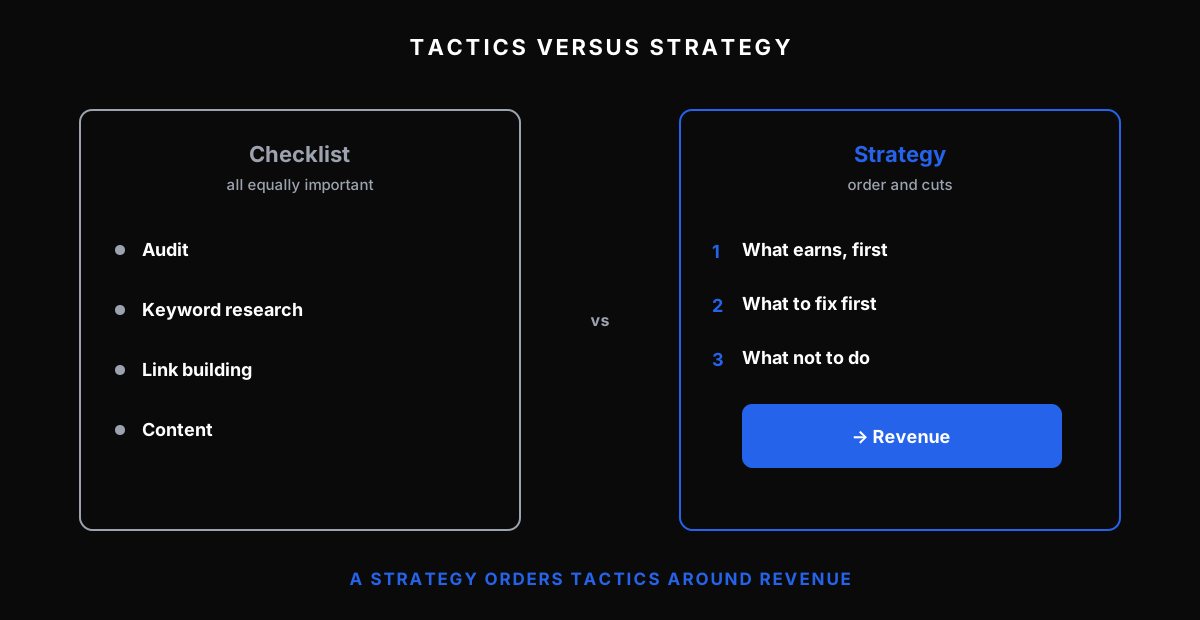
A strategy is easiest to recognize by what it leaves out. The cheapest strategy I can give you fits in one rule: a strategy is the list of work you deliberately cut, not the list you keep adding to. If the plan grows with every meeting and nothing ever leaves it, it is not a strategy, it is a wishlist.
This is exactly the trap most SEO strategy guides fall into. They all name the same elements, audit, keywords, competitor analysis, link building, content marketing, and call that list a strategy. The problem is that they treat every action as equally mandatory, which is the opposite of a strategy. A strategy is a ranking of importance, not an inventory.
Look at what those guides pile onto the list. Keyword research and content. Technical SEO, which alone splits into indexing, site speed, meta descriptions and alt text. Link building and competitor analysis. Each is a real tactic, and search engines reward all of them, but a strategy does not treat them as equal. It asks which of these search engine optimization tactics moves revenue here, and parks the rest.
Is An SEO Audit a Strategy?
An SEO audit is a diagnosis, not a strategy. A website audit points out what is wrong: technical SEO errors, broken elements, structure problems, weak content quality across your websites. It does not say which problem to fix first, because that is already a strategic decision, not the output of a site scan.
A very good audit can point out a hundred problems. Without a strategy you get a hundred tasks and zero order, and the team fixes what is easiest, not what costs you most in revenue. An audit is an input to a strategy, not a substitute for it.
Is Keyword Research a Strategy?
Keyword research is a tactic, not a strategy. A keyword list says what traffic you can capture, but not what is worth capturing. A strategy decides which keywords to serve with content, and which to leave alone because they have no sales potential.
A keyword that looks attractive in a tool is often worthless in the search results if the page behind it does not sell. So I treat keywords as a map of user intent, not a shopping list. I think about link relevance the same way: as a strategic choice, not a number to hit.
Who Needs An SEO Strategy, and Who Does Not?
An SEO strategy is needed by anyone who has more ideas for action than time to execute them. If everything feels urgent, you are not missing an executor, you are missing a decision about order. That is a strategy, and without it the budget spreads in every direction.
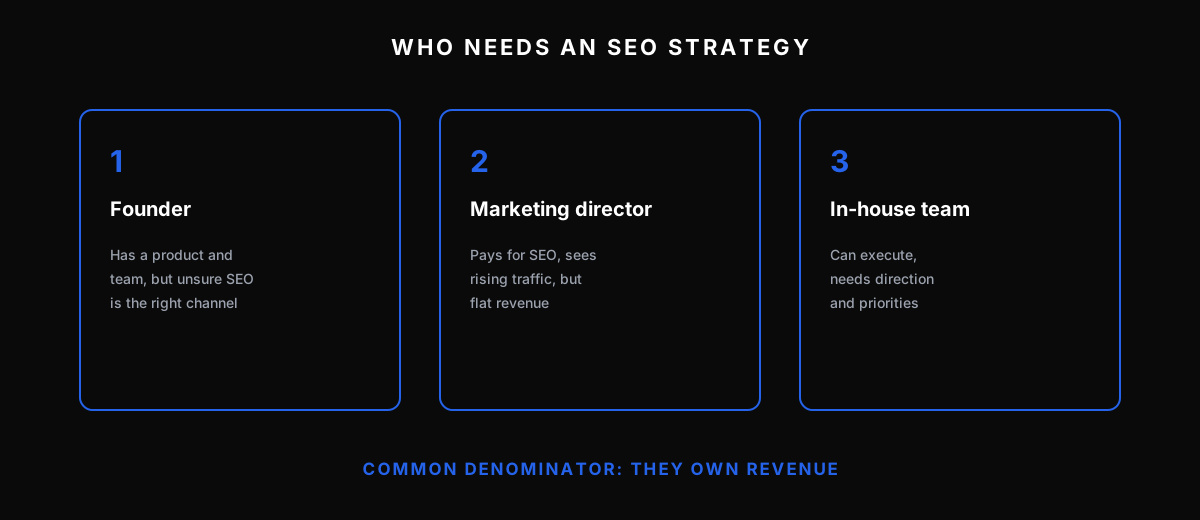
Three groups need it most often. Founders who have a product and a team but do not know whether SEO is the right channel. Marketing directors who pay for SEO work and see growing traffic against flat revenue. In-house teams that can execute but need someone to set the direction and settle the arguments over priorities.
The common denominator is one: these people own a revenue number, not a task count. For them an SEO strategy turns "do everything" into "do this, in this order, for this reason". That is rare, because most teams are busy, but do not know whether they are busy with the right things. A strategy gives a company that certainty before the budget is spent, not after.
Who Does Not Need An SEO Strategy?
It is not for everyone. If you are just starting and do not yet have a product with demand, an SEO strategy is an expense ahead of time, because there is no revenue yet for it to order. Sometimes the best advice is "not yet".
I say it plainly, because that is what separates a strategist from a package seller. If your market is only just forming, or you find customers mostly outside search, the budget for growth is better aimed elsewhere. An SEO strategy makes sense when demand already exists and you want to capture it in the search results. Google's own documentation on whether you need an SEO draws the same line.
This approach works in companies of every size, because online the same thing counts: whether traffic turns into customers. There are no other universal rules, so the strategy always starts from your specific website and your situation, not from a ready template.
SEO is one channel among several. If your customers live on social media or paid digital marketing, a search strategy may not be where the next dollar sits. Part of any marketing strategy is admitting when search is not the answer.
Why Do Most SEO Strategies Fail?
Most SEO strategies fail because they are a list of everything: audit, content, links, technicals, with no priority and no link to revenue. A plan that treats every action as equally important is not a strategy, it is a wishlist that nobody can actually deliver.
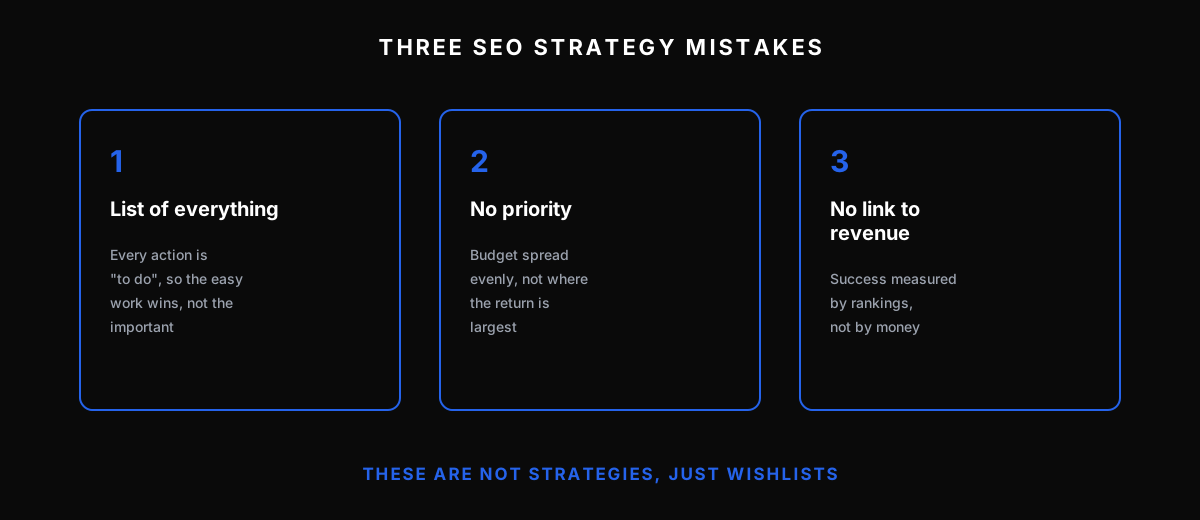
The first mistake is the strategy as a list of everything. A plan in which every item is "to do" gives the team no information, because it does not say what comes first. It ends with the team doing what is easiest, not what matters most for revenue.
There is always more SEO work than can be done well. So a strategy is effective only when it deliberately limits the list to the actions that genuinely attract your company's customers. The rest simply does not get made.
Mistake: No Priority in SEO Work
No priority costs the most. Even a good list of actions without order spreads the budget evenly across everything, instead of concentrating it where the return is largest. It is the most overlooked lever, because it looks less impressive than a new campaign.
A team can spend months efficiently doing work that does not move revenue, because nobody asked whether it was the right work at all. Optimizing a hundred pages at once looks like progress, but it dilutes the effort where there are no sales.
Mistake: No Link To Revenue
A strategy detached from revenue measures the wrong things. A plan that counts success by the number of keywords in the top 10 instead of money leads to work that looks good in a report and changes nothing in the account. That is how growing traffic with flat sales is born.
Sometimes the result is even a drop in rankings that nobody can tie to any decision, because there was no deliberate decision. A strategy with no anchor in revenue leaves a company with activity it cannot defend with a result.
What Does a Good SEO Strategy Deliver?
A good SEO strategy delivers focus: fewer actions, but the high quality ones that move revenue, not just a ranking or the count of rankings. It shows what to drop, so budget and time land where organic traffic and organic search actually earn.
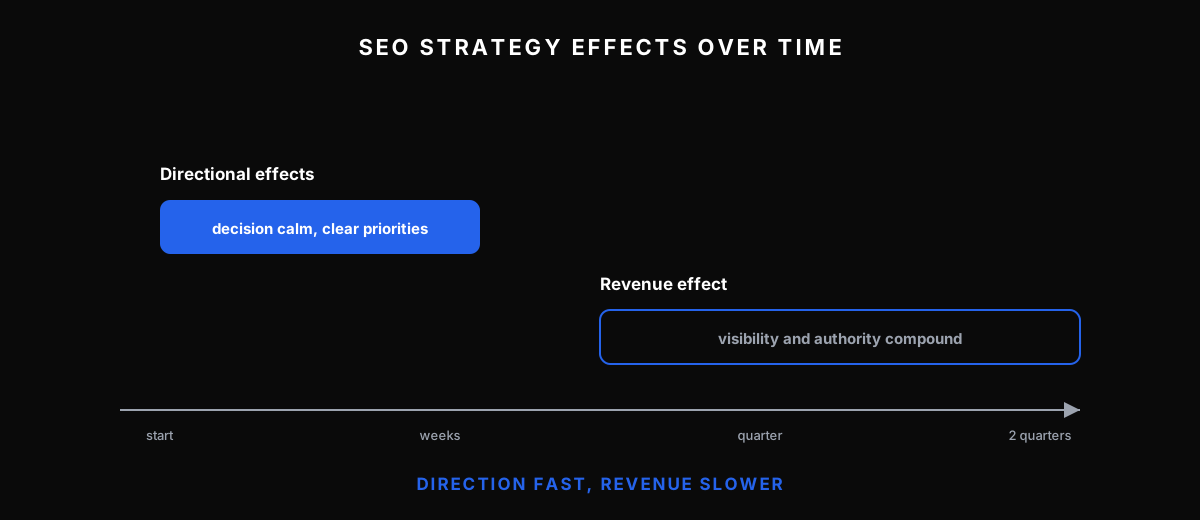
The most tangible effect is decision calm. You stop guessing. You know which theme you build this quarter, what you deliberately skip and why. You also know which queries are not worth targeting, even if they look attractive in a tool. That is a rare state in SEO, where the default mode is "do more".
You only have to factor in time. Directional effects show fast, because the chaos in priorities disappears and you know what to set aside. The hard effect in revenue is slower, because visibility and authority build over months, not days. A strategy that promises a revenue jump in a few weeks is selling hope, not a plan.
How Does a Strategy Build Visibility in The Search Results?
Visibility grows where the strategy tells it to grow. Instead of spreading optimization across the whole site, a strategy points it at the relevant pages and key elements tied to revenue and organic traffic. Visibility in the search results then becomes the result of a decision, not of chance.
In practice this means choosing a few themes where I want to be genuinely visible, instead of being "a little visible" everywhere. Focused visibility on the right keywords brings more sales traffic than scattered presence across hundreds of random queries.
Thanks to a strategy, visibility rises where it matters for business goals, not everywhere a little. Focusing on the right keywords lets you turn on-site traffic into customers, because users are drawn by content that answers their intent, not by mere presence in the results. A larger share of sales traffic means more than a longer list of rankings.
Search engines reward content quality and relevant answers over keyword-stuffed pages. A strategy leans into that: fewer, high quality pages that match intent and earn a better experience beat a hundred thin ones chasing the same rankings.
How Does Topical Authority Compound The Effect?
Topical authority is a lever, not another tactic. Pages built in the right order reinforce each other instead of competing, and that is how the effect compounds. A well-ordered topical map makes each new publication lift the ones already there.
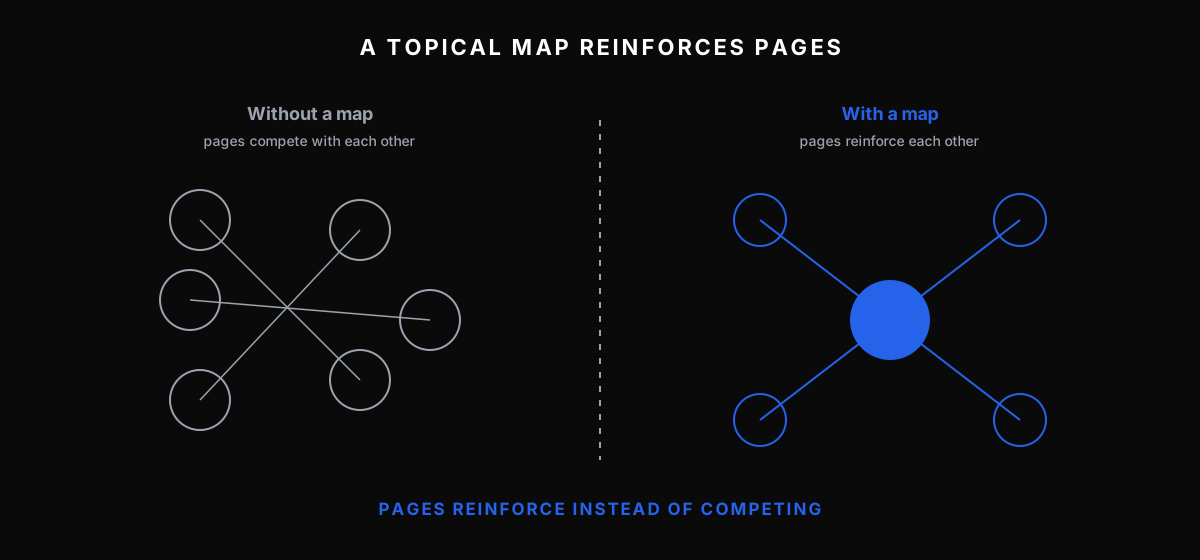
This is where strategy meets the concept of topical authority. Without a map, new content cannibalizes the old and a company competes with itself for the same spot in the search engine results. With a map, content settles into a network where each page has one job and one place.
SEO Strategy vs Execution and SEO Audit: How Do They Differ?
An SEO strategy decides, an audit diagnoses, execution does. Strategy sets what and why to do; a website audit is a diagnosis tool; execution is the ongoing work. Confusing these three roles is the most common mistake when planning work in organic search.
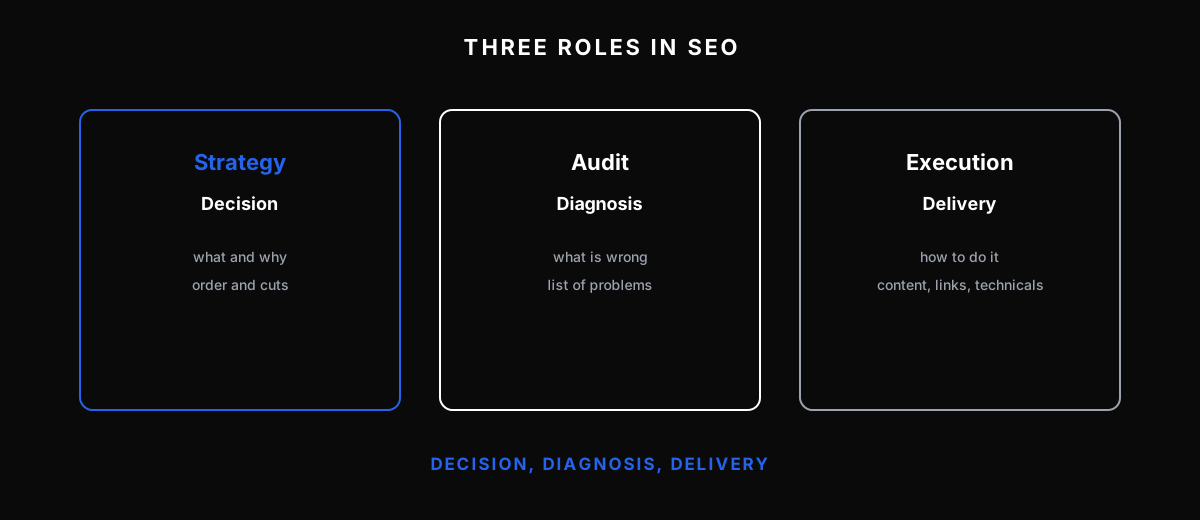
An SEO audit answers the question "what is wrong". Execution answers the question "how to do it": optimization, content, links, technicals. A strategy stands above both and says which diagnosis to turn into action and in what order to do it.
Where Does Strategy End and Execution Begin?
My role ends at the decision and the direction. The execution itself, the audit, content and link campaigns, I hand to a specialized delivery team, Mojo Links. That split is deliberate: the strategist keeps the work tied to revenue, the team delivers it cleanly.
The worst variant is five freelancers pulling a project in five directions: one writes content, one builds links, one fixes technical issues, and nobody owns the whole. A strategy fuses that chaos into one direction, and a coordinated team executes it. One strategist, one team, one map.
Where Do You Start An SEO Strategy?
You start an SEO strategy with one decision, not with the first task: where your organic traffic already exists and still does not earn. It is a question, not an action, and it sets the rest of the order before anyone touches the website.
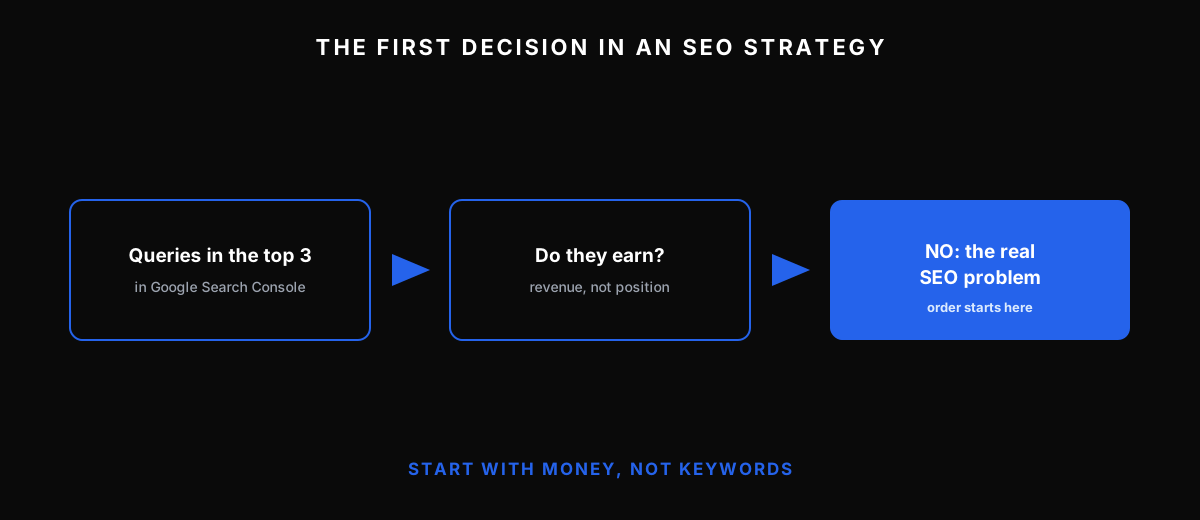
This is deliberately not a list of steps. Step by step belongs to execution, and a strategy starts with the frame in which those steps make sense. Money first, then keywords, technicals and content. The reverse order is the most common cause of work that changes nothing.
How Do You Read Google Search Console Data at The Start?
I look for the first signal in Google Search Console. I filter the queries the website already ranks in the top 3 for and that still bring no revenue. That short list is usually the real problem, and more content almost never solves it, only the right decision about order does.
The second step, I look at which pages collect impressions without clicks and which compete against each other for the same keywords. Google Analytics adds what users do after they land on the page. Only with that picture can you order optimization by priority, and not by chance.
Google Search Console shows how users reach your site and which pages of your websites carry the most relevant information about real demand and search terms. This data can change the whole order of work, because the page with the biggest potential is often one nobody treated as a priority. Read well, it shows where revenue is closest.
Frequently Asked Questions About SEO Strategy
SEO Strategy, What Is It in One Sentence?
It is the decision about where your organic revenue leaks and what to fix first, not a list of tasks to tick off. A strategy sets the order and the cuts; the audit, keywords and links are only its execution.
How Long Does It Take To Build An SEO Strategy?
The diagnosis and the map are a matter of weeks, because it is work on data, not on guesses. Directional effects show almost at once, and the hard effect in revenue usually after one or two quarters, because visibility and topical authority compound slowly.
How Does An SEO Strategy Differ from An SEO Audit?
A website audit is a diagnosis, a list of problems. A strategy is the decision about which of those problems to fix first and why. An audit says what is wrong; a strategy says what to do about it in the search results so that sales grow.
Does a Small Business Need An SEO Strategy?
Yes, if it already has a product with demand and a limited budget. The fewer the resources, the more important the order, because a small business cannot do everything at once. A strategy protects it from spreading budget across actions that do not earn.
Who Builds An SEO Strategy?
A strategist builds it, most often an independent SEO consultant who reads the data and owns the direction. The execution, the optimization, content and links, is delivered by a team. The best setup is one strategist setting the map and a coordinated team rolling it out.