An SEO consultant is not another pair of hands clearing a task list. It is the person who looks at your business through revenue and says plainly where organic traffic turns into money and where it only turns into charts. I have run SEO for 10 years, remotely from Thailand, and the lesson holds: most companies do not need more tasks, they need the right order.
What An SEO Consultant Actually Is
An SEO consultant is an independent strategist who designs search visibility from data, not guesses. The consultant diagnoses where a business loses organic revenue, sets priorities, and decides what to build. The consultant advises and plans, then hands execution to a specialized team.
The word that matters is independent. I do not sell a package, so I have no reason to recommend more links or more content than you need. My product is judgment. I work the semantic SEO and topical authority method developed by Koray Tuğberk Gübür, and I ground decisions in Google Search Console data, not hunches.
Put it in three roles and it gets clear: the agency owns execution, a tool owns measurement, and the consultant owns the decision. The three do not compete, they stack. Mine comes first, because without a decision about what to build and why, execution and measurement both run blind.
A consultant differs from an executor in one thing: accountability for direction, not for the number of tasks. A specialist asks "what do I do this week." A consultant asks "what is worth doing at all, and why this and not that." That single shift in the question is what you are paying for.
What An SEO Consultant Does Day To Day
An SEO consultant audits content, structure, and links, builds a topical map and a semantic strategy, and sets priorities from Google Search Console data. The consultant translates results into business decisions and hands the plan to a delivery team. The consultant does not mass-produce content or build links by hand.
Execution is a separate, expensive job when a strategist does it. That is why I pass the delivery, the audit, content, and links, to a specialized delivery team, while I hold the direction.
A diagnosis tends to surface the same things. Pages that collect impressions but no clicks. Topics that cannibalize each other because they were published without a map. Queries a company chases that carry no commercial intent. Those findings come out of Google Search Console data, not my intuition, which is why they hold up in front of a board.
A topical map is not a keyword list. It is an ordered network of topics where each page has one job and one place, and no page competes with its neighbor for the same query. I build it so each new piece strengthens the ones already there instead of diluting them. Only with that map does a team know what to write, and in what order.
How An SEO Consultant Works
An SEO consultant works in four steps: diagnose on data, build strategy and a topical map, set delivery priorities, hand off to execution. Revenue comes first, rankings second, traffic last. The consultant does not run the campaigns, the consultant designs them and guards the direction.
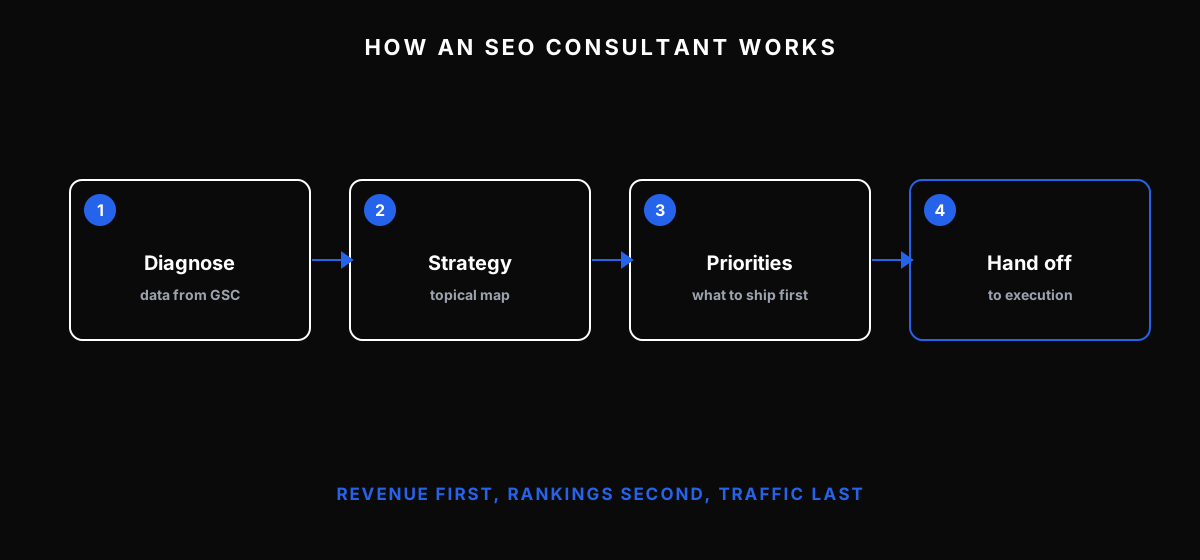
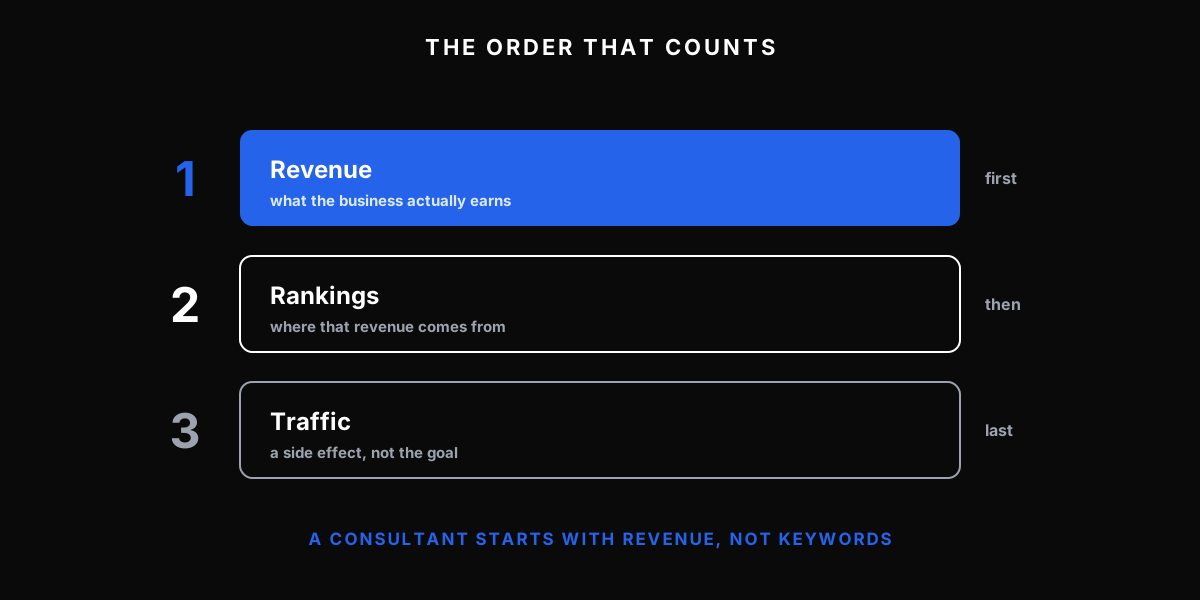
That order is deliberate. Traffic without revenue is vanity, rankings without traffic are theory. I start from where the money is, then look at which queries and pages lead to it. The topical map rests on topical authority.
Each step ends in a decision, not a report. Diagnosis answers what hurts, for example why rankings drop. Strategy sets which topic to build and in what order, so pages reinforce each other instead of competing. Priorities say what to do this quarter and what to deliberately leave alone. The hand-off is where the plan reaches the team that will execute it. Skip that last step and you are left with a strategy nobody ships.
What An SEO Consultant Looks at First
An SEO consultant looks first at how search engines rank your website, then at where each page leaks revenue in the search results. The work splits into three layers: technical SEO as the foundation, content and keyword research as the body, and optimization priorities as the order. None of it matters until a search engine can crawl, read, and trust the site.
Technical SEO comes first, because a search engine cannot rank a page it cannot reach. I check crawlability, indexation, and site structure before a single word of content. A fast, clean website is not a ranking trick, it is the price of entry into the search results. Once that foundation holds, the question becomes which pages deserve optimization, and in what order.
Keyword research is where most teams start and most consultants should not. I treat keyword research as a map of intent, not a shopping list of phrases. A query that looks valuable in a tool can be worthless in the search results if the page behind it never converts. The aim is not to rank for every keyword, it is to rank for the search results that move revenue. Search engine optimization is a prioritization problem long before it is a content problem.
Optimization comes last, in priority order. Most websites do not need more pages, they need the pages they already have to earn. I look at which pages rank, which sit just off the first page of the search results, and which compete with each other for the same query. Optimization without that map is motion without direction, and it is how a website ends up busy and flat at the same time.
Where An SEO Consultant Finds The Revenue Leak
An SEO consultant finds the leak by reading the website page by page, not the dashboard in aggregate. The pages that rank in the top results but earn nothing are the real problem, and they hide inside an average that looks fine. I rank every important page by the gap between its position in the search results and the revenue it returns.
Three patterns show up on almost every website. A page ranks well and converts poorly, so the optimization belongs on the page, not the keyword. Two pages compete for the same query in the search results, so one should be merged or cut. A page earns nothing and ranks nowhere, so it is dead weight dragging the whole site down. A ranking is only useful when the page behind it does its job.
This is why I trust page-level results over site-level reports. A website can grow its total traffic while its best pages quietly lose ground in the search results. The consultant's job is to see that on the page, name it, and put the fix in priority order before anyone spends another hour on optimization.
Who Needs An SEO Consultant
An SEO consultant is for founders, CMOs, and in-house teams who own a revenue number. It fits when a company has delivery capacity but no direction, or when existing SEO grows traffic without moving sales. It is the wrong spend before you have product demand.
I will say "not yet" when that is the honest answer. Judgment includes telling you when SEO is not the channel to back.
The most common moment someone looks for me is not missing traffic, it is traffic that does not convert to sales. The company sees rising charts in the agency report and a flat revenue line in the bank. That gap is exactly what a consultant closes: setting priorities so the work counts where the money is.
SEO Consultant vs Agency: Which To Choose
An SEO consultant gives independent strategy and decisions, an agency gives delivery capacity. The best setup uses both: an independent strategist sets direction, a tight team executes it. The consultant owns "what and why", the team owns "how". It is not one against the other.
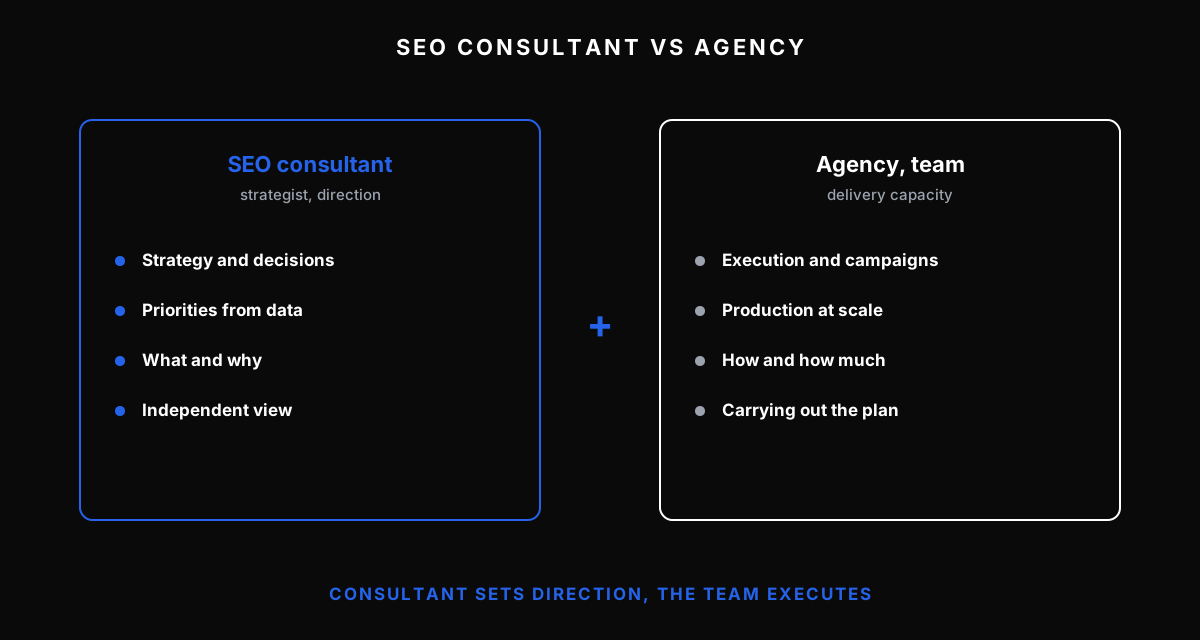
I built a delivery team, Mojo Links, precisely so strategy has somewhere to land. If you want the campaigns, pricing, and managed delivery, that is the agency's job. If you want the direction and the second opinion, that is mine.
The worst setup is five freelancers pulling a project five directions: one writes, one builds links, one fixes technical, and nobody owns the whole. A consultant collapses that into one direction, and a tight team executes it. One strategist, one team, one map. The most expensive mistake is not a bad agency, it is a good agency with no direction, executing for months work that does not move revenue because nobody asked whether it was the right work.
SEO Consultant vs SEO Specialist
An SEO consultant owns strategy and business-level decisions, an SEO specialist executes operational tasks. The consultant looks at revenue and project-wide priorities, the specialist runs individual actions. They work best together: I design the map and the priorities, specialists on the team carry them out.
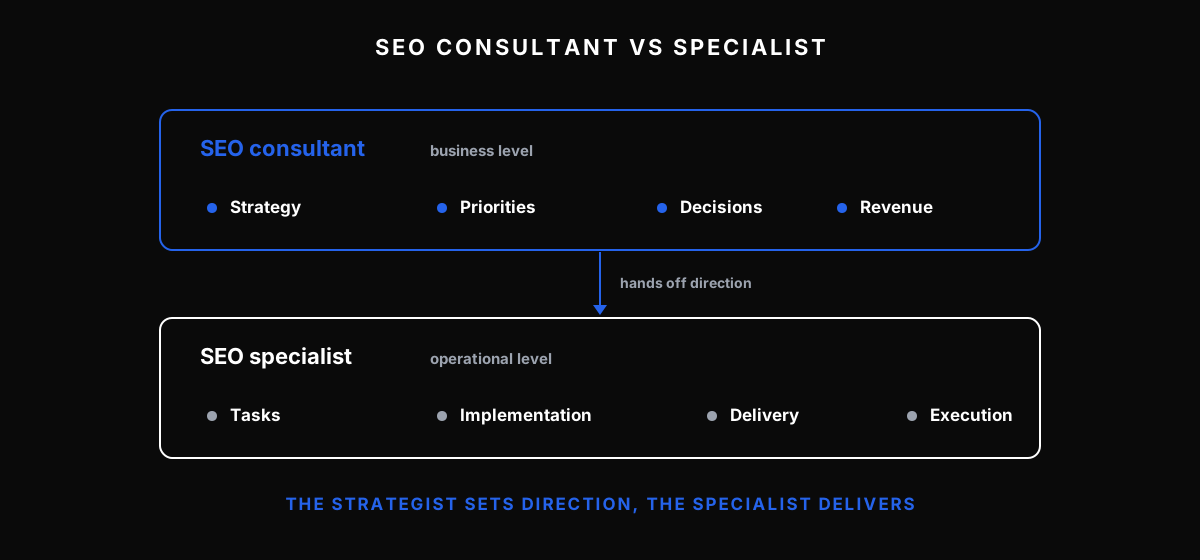
An example from practice: a specialist gets the task "optimize 20 pages." A consultant asks first whether those 20 pages should exist, whether they cannibalize each other, and which of them can realistically earn. Same task, a completely different order of thinking.
How To Choose a Good SEO Consultant
You know a good SEO consultant by where they start: data and revenue, not a task list. They ask about your business model, show a method, and say plainly when SEO is not the answer. Avoid anyone promising specific positions, or whose advice only ever ends in their own package. Google's own guidance on hiring an SEO lands in the same place: ask for data and reasoning, not promises.
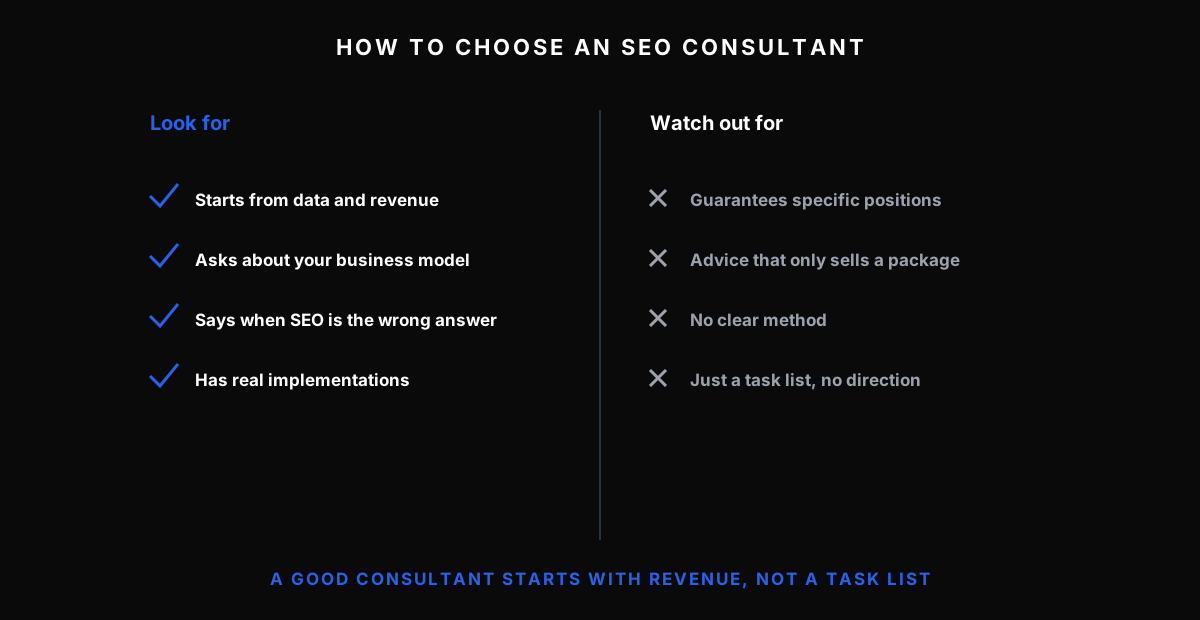
Ask three questions before you sign. First: do you start from data or from a keyword list. Second: when will you tell me SEO is not the right channel. Third: who executes the plan and how do you hand it over. Also watch whether the consultant asks about your revenue, not just your keywords. Someone who wants to see where the money actually comes from on the first call thinks like a strategist. Someone who opens with a list of 300 keywords to deliver thinks like an operator, and is better placed inside the team than as your advisor.
What Results An SEO Consultant Delivers
Working with an SEO consultant delivers direction: a topical map, priorities, and a plan a team can execute. The result is visibility tied to revenue, not traffic for its own sake. Decisions rest on Google Search Console data.
The cheapest audit I can give you fits in one sentence: show me the queries where you rank in the top three and still make no money. That list is your real SEO problem, and more content almost never fixes it. The fix is the right order of work, and that is where a consultant starts.
The first effect shows quickly: the chaos in priorities clears and you know what to set aside. The hard revenue effect is slower, because topical authority compounds over months, not days. That patience has to be priced in from the start. A consultant who promises a revenue jump in a few weeks is selling hope, not a plan.
What Does An SEO Consultant Cost?
The cost of an SEO consultant depends on scope: a one-time audit and strategy, or an ongoing advisory role. I price it after a conversation about goals and model, because advice without context is worthless. The delivery itself, packaged and quoted, is run by a specialized execution team.
I do not quote a number out of thin air, because advice without context is worthless. A one-time diagnosis and map prices differently from an ongoing strategist seat on a project. The first conversation exists to work out what you actually need, and often it is less than you expected.
What Makes a Real SEO Expert
A real SEO expert is built from experience, not a certificate. The skills that matter are pattern recognition across many websites, knowledge of how search engines actually change, and the judgment to apply best practices to your industry instead of a generic checklist. Experts who have run real projects know which search engine optimization tactics age well and which break at the next update.
I lean on Google Analytics and Search Console data, not opinions, because an SEO strategy is only as good as the evidence behind it. The strategies that compound are grounded in your own numbers, your own industry, and your own search results. A good SEO audit reads that data and turns it into a process you can repeat, not a one-off report. That is the difference between an SEO strategy and a list of tactics.
The market is full of SEO consultants who sell tactics. Fewer sell judgment. The difference is whether the expert improves your business or just your activity, and whether their knowledge of the industry helps you decide what to ignore. Experience shows most in what a real SEO expert tells you not to do.
How SEO Consulting Fits The Rest of Your Marketing
An SEO consultant does not work in isolation from the rest of your marketing. Search is one channel, and a good consultant tells you honestly when another channel would move revenue faster. Organic results compound, but slowly, so I weigh them against paid, email, and the rest of your digital marketing before I recommend where to spend.
The website is the asset every channel feeds. A professional SEO consultant treats your site as the place where marketing turns into revenue, not as a set of pages to optimize for their own sake. If your online presence already converts, search amplifies it. If it does not, more search traffic only exposes the leak faster.
This is why I start from the business, not the channel. Digital marketing has too many tactics and not enough prioritization. My job is to tell you which results are worth chasing this quarter, and which are noise dressed up as opportunity. That judgment is the whole point of hiring a consultant instead of buying another set of tasks.
Frequently Asked Questions About An SEO Consultant
Does An SEO Consultant Guarantee Rankings?
No, and that is a good sign. Nobody controls Google's algorithm, so a guarantee of a specific position in the search results by a specific date is a red flag. A consultant guarantees a direction grounded in data, not a spot in the ranking.
Do I Need a Consultant If I Already Have An Agency?
Yes, if you have delivery capacity but no independent direction. The consultant sets strategy and priorities, the agency or team executes them. They are two different roles that work best together.
How Long Does Working with An SEO Consultant Take?
It depends on scope. A one-time audit and strategy is a matter of weeks. An ongoing strategist role is months, because topical authority compounds slowly. The revenue effect usually shows after one or two quarters.