SEO in the age of AI reads as a rupture and behaves as a continuation. AI search is the retrieval-plus-generation answer layer that artificial intelligence now places above the ten blue links, and the honest read is that it changed the entry point far more than it changed the machinery. I run three brands through this shift and watch the same pages keep winning. The panic sells; the mechanism is duller and more useful.
AI Search Is The Answer Layer Above The Blue Links
AI search is the answer layer that generative systems place above traditional search results. Google AI Overviews, Google AI Mode, and answer engines like ChatGPT, Perplexity, and Gemini all read a query, retrieve sources, and generate a synthesized reply.
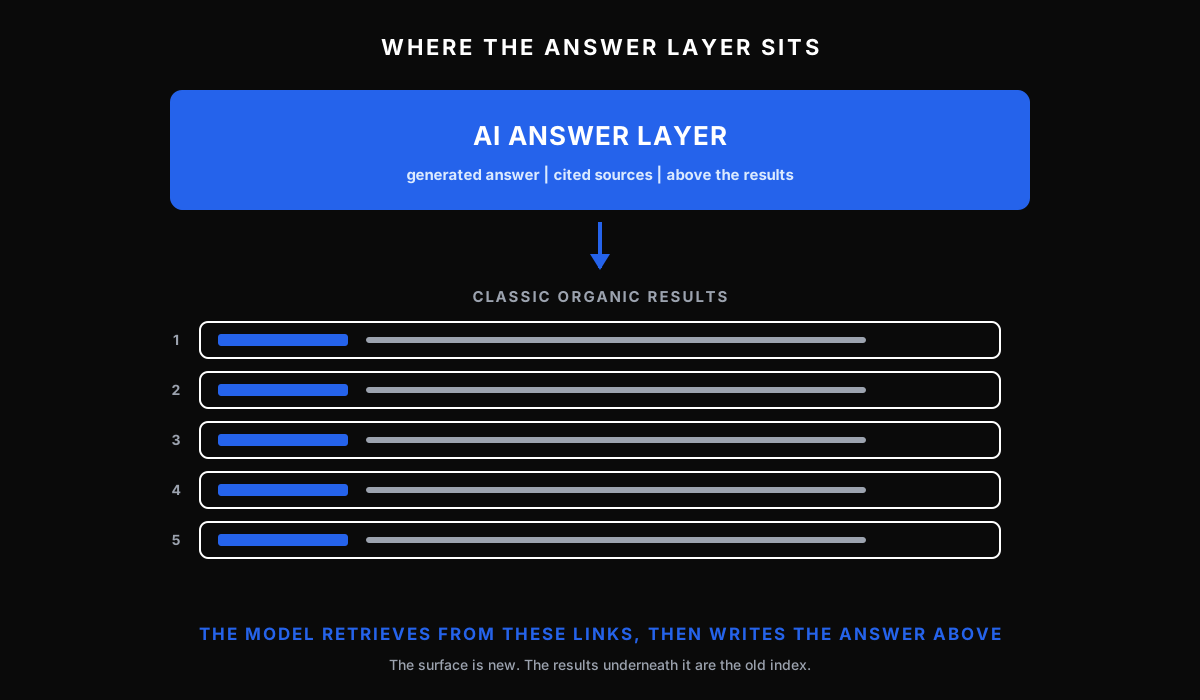
The label confuses people because it points at products, not a mechanism. AI Overviews is a Google SERP feature. AI Mode is a conversational Google surface. Perplexity is a standalone answer engine. ChatGPT search bolts retrieval onto a chat model. What they share is the sequence I care about: a query comes in, the system pulls candidate documents, and a language model writes an answer over them. These systems do not replace search engines; they wrap a generation step around the answers that search engines already produce. Koray Tuğberk Gübür frames the underlying discipline as semantic search, and AI search is that discipline made visible at the top of the page.
What Actually Changed Is The Entry Point, Not The Index
What changed is the entry point, not the index. AI search still retrieves from a crawled, ranked index before it generates anything. The synthesis layer is new. The pipeline that decides which pages are eligible to be pulled is the same one SEO has always fed.
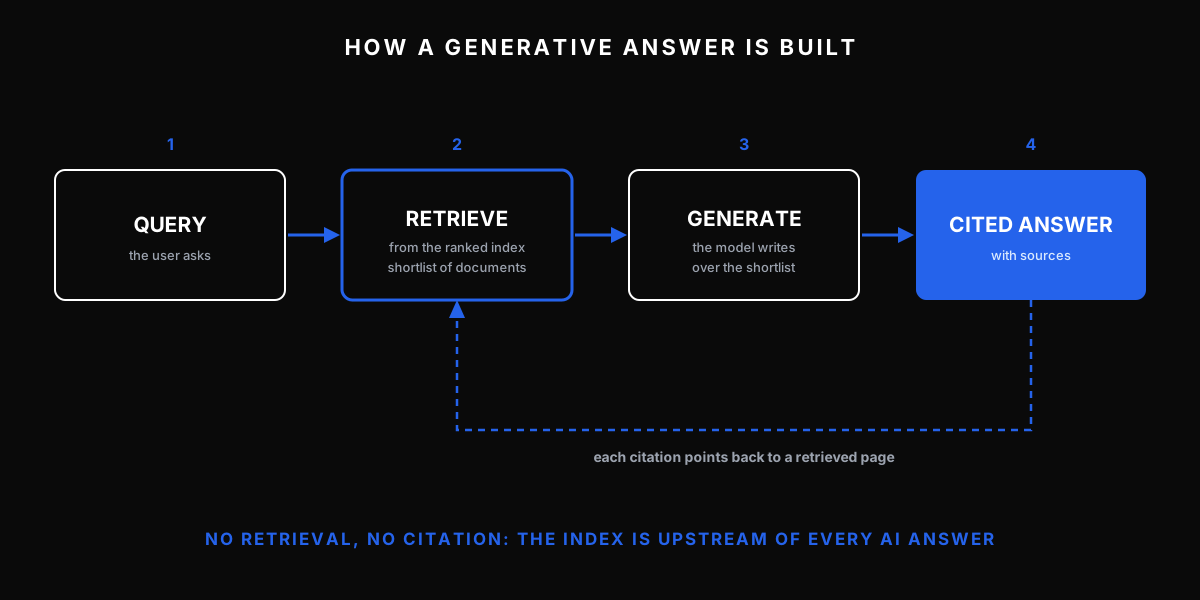
A generative answer is a two-step act: retrieval, then generation. The model does not know your page. It queries an index, receives a shortlist of documents, and conditions its answer on that shortlist. This is retrieval-augmented generation, and it means the index is upstream of every AI answer. If your page is not retrievable, it is not in the shortlist, and nothing the model writes will mention it. The gatekeeping stayed exactly where it was, inside crawl, index, and rank.
This is why I treat AI search as a new distribution surface rather than a new ranking system. The surface is different: an answer, cited, above the search results. The eligibility test underneath it is the one I already knew how to pass. That distinction is the whole post, and most panic pieces collapse it.
What AI Search Did Not Change
AI search did not change the fundamentals. Relevance, clear entities, topical authority, crawlability, and links as trust still decide which pages search engines retrieve. A generative model can only cite what it first retrieved, and it retrieves what classic SEO makes findable and trustworthy.
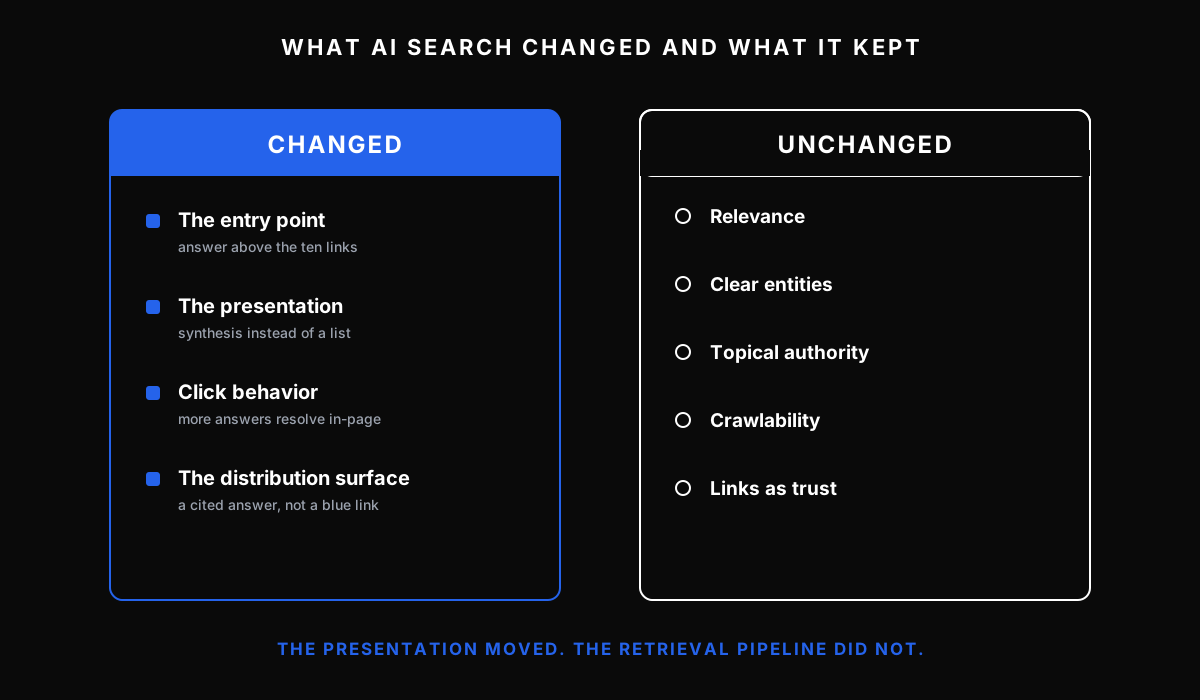
Walk the list. Relevance still decides the shortlist, because retrieval is a relevance function before it is anything else. Entities still decide what a page is read as being about, which is why entity salience governs whether a model pulls your page for the right query. Topical authority still decides trust across a topic, and a model conditioned on retrieved sources leans on the same authority signals a ranking system does. Crawlability still decides whether the page enters the index at all. Links still carry trust between documents. None of these five moved.
Every one of them is more decisive when the output is a single synthesized answer instead of ten links, because a shortlist of five sources is less forgiving than a first page of ten.
Look at each fundamental as a signal a search engine already trusts. Keyword targeting still tells a search engine which query a page answers, though I treat keywords as evidence of intent, not as a density quota. Backlinks still pass authority between websites, and a page with earned backlinks is a page an answer engine is more likely to retrieve. Structured data still helps search engines read a page's entities without guessing. None of these signals was retired by artificial intelligence; each one feeds the retrieval step that every AI answer depends on.
The phrase AI driven search can mislead. An AI driven answer is still a retrieval-based answer, and search engines still assemble the search results the model reads from. When search is changing, the interface changes faster than the ranking system: the entities and links that made a website findable last year make that website findable to an AI powered answer today, and an AI powered surface still reads from search results a search engine ranked.
The cleanest way I put it to clients: a language model is a retrieval system wearing a synthesis coat. Take off the coat and the thing underneath is semantic SEO, which is the discipline of making a page unambiguous to a machine. The coat is impressive. The body is the same body.
Zero-Click Was Already Here
Zero-click search predates AI search by a decade. Featured snippets, People Also Ask, and knowledge panels already answered queries inside the results page. AI Overviews accelerate a trend that started when Google first lifted an answer out of a document and printed it above the links.
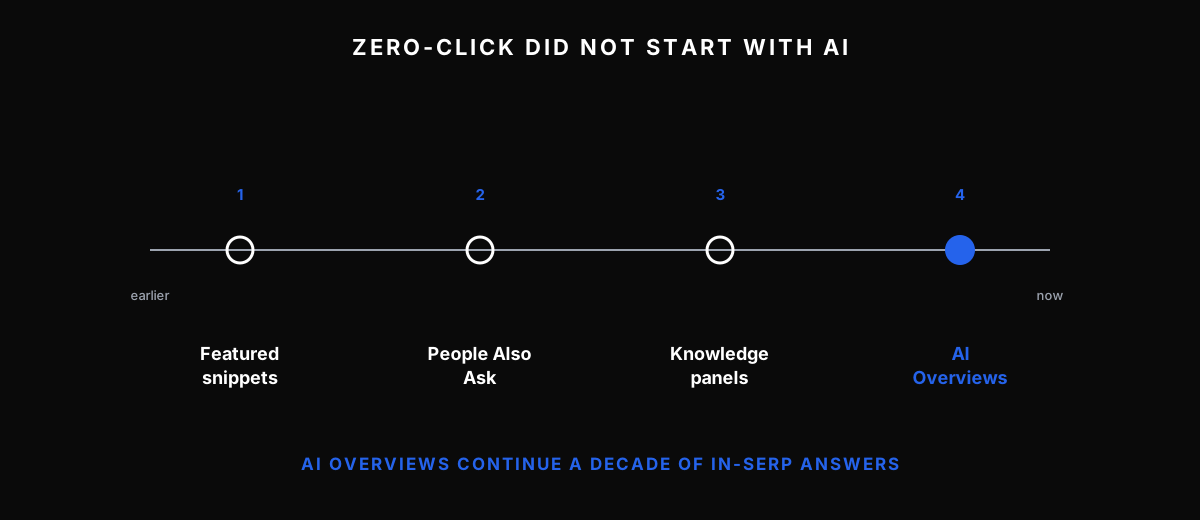
I find the "AI killed the click" claim useful mostly as a date check. The click has been eroding since featured snippets shipped. Operators who built for extraction, who wrote the 40-word answer a snippet could lift, were already being cited without the visit. AI search widens that behavior; it did not invent it. The strategic response is not new either: if the answer layer will quote you, be the source it quotes. Visibility inside the answer is the goal that replaces the click, and it rewards the same clarity a snippet always did.
There is a real cost here. Informational queries that once earned a visit now resolve in the overview, and traffic to thin definitional pages falls. That pressure is genuine, and it lands hardest on content that added no information gain over the answer itself. The pages that survive are the ones a reader clicks through to precisely because the overview was not enough.
The metric that matters shifts from clicks to visibility inside the answer. When a search engine lifts my sentence into an AI Overview, my page earns visibility even when the searcher never visits. I track which pages get surfaced as answers, because that information shows where my content already reads as the best source. Search results are becoming a place to be quoted, not only clicked.
How To Recalibrate SEO for AI Search
You recalibrate SEO for AI search by writing for the entity and its frame, then earning citations as the retrievable source. The work shifts from chasing clicks to being the page worth citing. The methods are the semantic ones I already run; the target moved up the page.
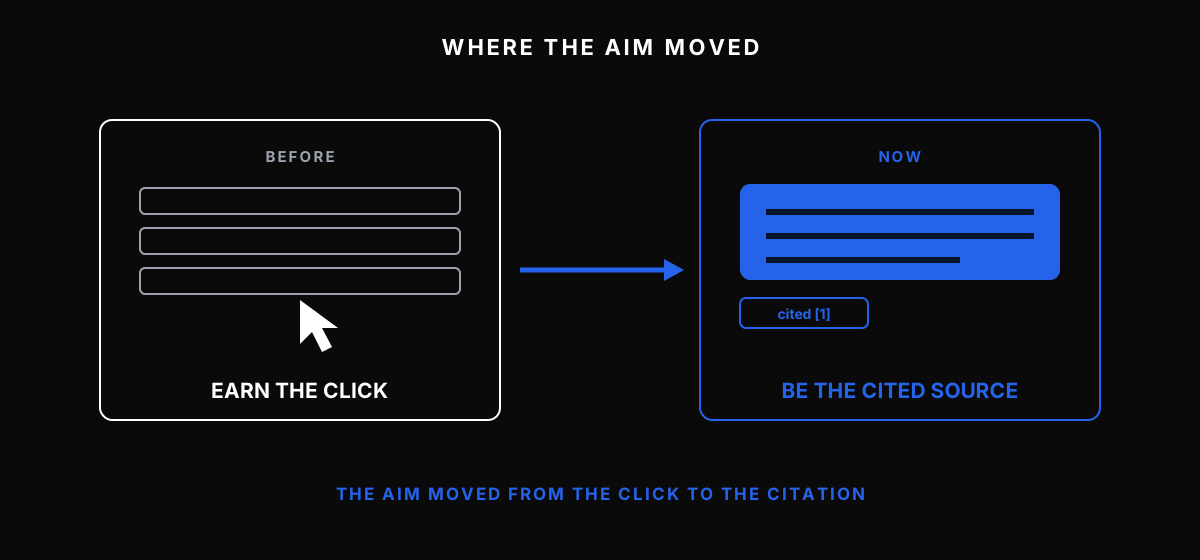
Recalibration is a change of aim, not a change of craft. I write pages that state one entity clearly, fill the frame a topic expects, and answer questions extractively so a model can lift a clean sentence. I build internal links whose anchors name the entity, because topical authority is what makes a source trusted enough to cite. I keep the page crawlable and fast, because an unretrievable page is invisible regardless of quality. This is answer engine optimization, and it is close enough to classic semantic SEO that I treat answer engine optimization as the same discipline pointed at a new surface. None of this is a ranking hack. It is the durable work, aimed where the attention went.
The recalibration touches five habits. I still do keyword research, but I read keywords as a map of intent and questions, not a density target. I structure content so a search engine can extract a clean answer, which improves both featured snippets and AI citations. I invest in topical authority because it is the strongest signal that a source deserves to be quoted. I keep the reader experience fast and readable, since a human still decides whether to trust the page. And I measure which pages get cited. These are ordinary semantic SEO strategies, aimed at a new surface rather than reinvented for it.
These SEO strategies focus on quality and structure more than volume. A page with structured content and genuine quality earns citations that thin pages never will. Long tail queries matter more than ever, because a specific question is what an answer engine tries to resolve, and the page that answers it precisely becomes the cited source.
My focus stays on the durable SEO strategies, not the format of the week. The market fills with AI tools that promise to win the answer box, and some of those tools help, but none substitutes for search engine optimization that makes a page worth retrieving. AI generated content that adds no information gain reads as thin to the same systems, whether it lands on a blog or on social media, and more searches now resolve against depth than volume.
What Breaks When You Chase Every AI Feature
SEO breaks when an operator rebuilds a site around one volatile answer feature. AI surfaces change monthly. A strategy pinned to the current shape of AI Overviews inherits that volatility, while the fundamentals that feed every surface stay stable. Chasing the feature trades a durable asset for a moving one.
I watch two failure modes repeat. The first is abandoning topical authority to prompt-stuff for whatever the answer box seems to reward this quarter, which produces pages that read to a machine as thin and to a person as strange. The second is treating generative engine optimization as a brand-new discipline that obsoletes SEO, then buying tools and SEO strategies against a problem that semantic SEO already solved. Both mistakes share a root: they respond to the presentation layer and ignore the retrieval layer beneath it. The website that keeps compounding is the one that improves entities, coverage, and trust, then lets those improvements pay out across whatever surface Google ships next.
The steadier bet treats the web as a set of durable signals that AI systems read, not a single feature to game. AI models change their behavior often, and the websites that panic-rebuild for each change spend their budget on a moving target. I would rather own the fundamentals every future AI system must read, because retrieval is not going away. The future of search rewards the operator who compounds authority, not the one who chases the newest box.
Is SEO Dead in The Age of AI?
No. SEO is not dead in the age of AI. Retrieval-grounded generation makes classic relevance more load-bearing, not less, because a model cannot cite a page it never retrieved. The work shifts from earning the click to being the source worth citing, and that work is semantic SEO.
The "SEO is dead" headline arrives on schedule with every platform shift, and it has been wrong every time for the same reason. Search still needs a way to decide which documents are relevant and trustworthy; it added a layer that reads them aloud. The layer is hungry for exactly what SEO produces: clear, retrievable, authoritative pages. A discipline that makes pages easier for machines to trust is more valuable when a machine is writing the answer, not less.
The operators who treated SEO as chasing algorithms are the ones declaring it dead. The operators who treated it as making pages genuinely useful are being cited more than ever, because usefulness is what the answer layer surfaces.
Where GEO Fits
Generative engine optimization is semantic SEO re-labelled for generative surfaces. GEO names the practice of being cited by answer engines, and the practice is entity clarity, topical authority, and retrievable structure. The surface is new; the discipline underneath it is the one operators already run.
I keep GEO in its place on purpose. It is a useful label for a real target, the answer layer, and a misleading label if it implies a separate craft. When someone asks whether they need a GEO strategy, my answer is that they need a semantic SEO strategy that accounts for the answer layer as a distribution surface, which is what I have described here. The mechanics of what an answer engine cites, and why one source wins the citation, are their own subject, which I hold for a dedicated piece.
Frequently Asked Questions About SEO in The Age of AI
What Is AI Search?
AI search is the answer layer that generative systems place above traditional results, including Google AI Overviews, Google AI Mode, ChatGPT search, Perplexity, and Gemini. Each reads a query, retrieves sources, and generates a synthesized, often cited answer, rather than returning only a list of links.
Does AI Search Replace Google?
No. AI search sits on top of the same crawl-index-rank pipeline that Google already runs, and Google is itself a primary AI-search surface through AI Overviews and AI Mode. The retrieval layer that decides which pages are eligible to be cited did not go away.
Will AI Overviews Reduce My Organic Traffic?
AI Overviews reduce clicks to thin informational pages that add nothing beyond the answer itself. Pages with genuine information gain, depth, or a reason to read past the summary hold up better. The trend continues a decade of zero-click erosion that featured snippets began.
Do I Need a Different SEO Strategy for AI?
You need the same semantic SEO strategy aimed at a new surface. Clear entities, topical authority, crawlability, and extractive answers make a page retrievable and citable. A strategy rebuilt around one volatile answer feature inherits that feature's instability instead of the fundamentals' stability.
How Does AI Search Affect Content Marketing?
AI search rewards content marketing that produces genuine information gain. Thin pages built only around keywords lose visibility, while content with data, insights, and depth earns citations. Search engine optimization and content marketing converge here: both now aim to make a page the one that artificial intelligence quotes as a source.
What Is The Difference Between SEO and GEO?
SEO makes pages relevant and trustworthy to search systems. Generative engine optimization, or GEO, aims that same work at answer engines that cite sources. GEO is semantic SEO re-labelled for generative surfaces, not a separate discipline that replaces it.