Topical authority is the standing a site earns inside a single topic by covering that topic's full query network and performing on those queries over time. Koray Tuğberk Gübür formalized it as one relationship: Historical Data multiplied by Topical Coverage. I read it first as a linguist, because linguistics already had the vocabulary for it.
When SEO operators describe topical authority as a number that goes up, I hear a category error. Authority over a topic is not a quantity stored on a domain. It is a structural fit between what a site is about and what a topic demands. The rest of this is that structure, taken apart slot by slot, the way I read it as a linguist before I read it as an SEO.
What Topical Authority Actually Means
Topical authority is a relationship, not a score. It describes how completely a site covers one topic's query network, and how well that site has performed on those queries historically. The unit of measure is the fit between a site and a topic, not a value printed on the domain.
The word authority misleads people because it borrows from public relations, where authority means reputation. The topical-authority sense comes from information retrieval, where it means something closer to coverage and consistency. A site holds authority over a topic when a search system can rely on it to answer most of the questions that topic generates, and has been able to rely on it for a while.
This is why I resist treating topical authority as a metric you read off a dashboard. There is no single exportable number that captures it the way Ahrefs Domain Rating captures graph strength. Topical authority is distributed across every page a site has published in a topic, and across the full history of how those pages performed. You model it. You do not retrieve it.
Historical Data Times Topical Coverage, Decomposed
The formula has two factors. Topical Coverage is the proportion of a topic's query network a site actually addresses. Historical Data is the accumulated record of how that site performed on those queries: clicks, impressions, and rankings, held over time. Authority is their product, not their sum.
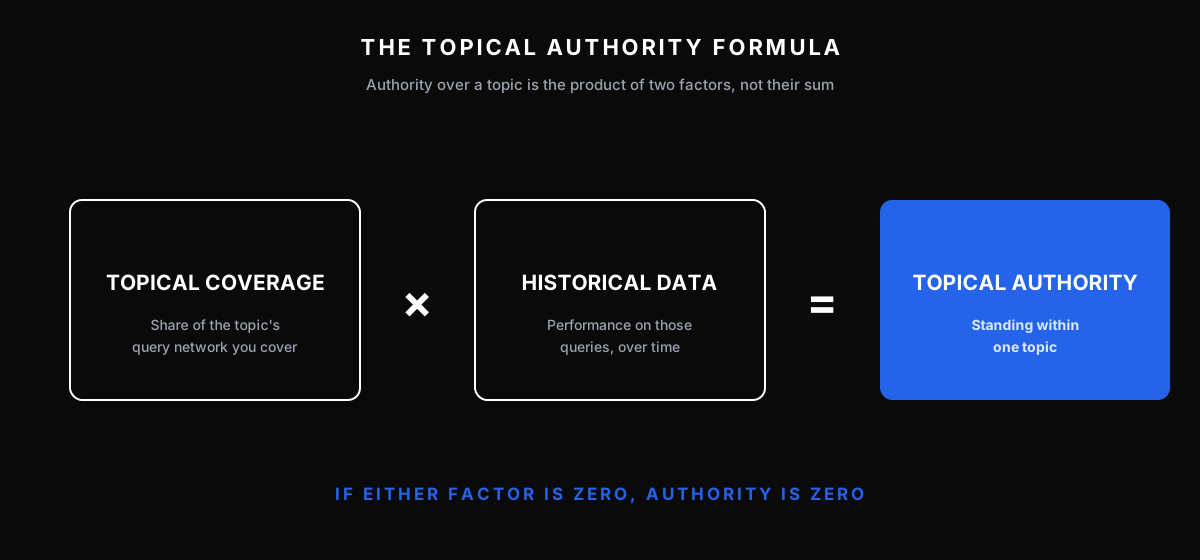
The product framing matters more than it looks. If either factor sits near zero, the result sits near zero. A site can cover a topic exhaustively and still hold no authority if no performance history stands behind that coverage. A site can carry years of history on three queries and still hold no authority because its coverage of the topic is too thin. Both factors have to be present, and they multiply.
The Coverage You Control
Topical Coverage is the factor an operator controls directly. It is the proportion of a topic's query network a site has actually addressed: the central definition, the adjacent questions, the comparisons, the failure modes, and the edge cases. Coverage is a decision, not a wait.
This is the half of the formula you can move this quarter. Every page that fills a slot the frame still expects raises Topical Coverage; every page that repeats a slot already filled does not. The discipline is knowing which slots are still empty, which is a matter of reading the topic's query network rather than guessing at volume. Mapping a site's current coverage against that full query network is what a semantic SEO audit does, and it is the step I run at Mojo Links before any new content gets written.
The History You Accumulate
Historical Data is the factor only time and performance produce. You cannot publish your way to it; you accumulate it, which is why topical authority is slow to build and hard to dislodge once built. It is the record of how a site's pages performed on the topic's queries: clicks, impressions, and rankings, held across months.
This is the half of the formula you cannot rush. A site that completes its coverage in one quarter still has to wait for the history to accrue beneath it. That waiting is not failure. It is the second factor doing its work, and it is the reason a late entrant cannot buy its way past an incumbent that has held the topic for years.
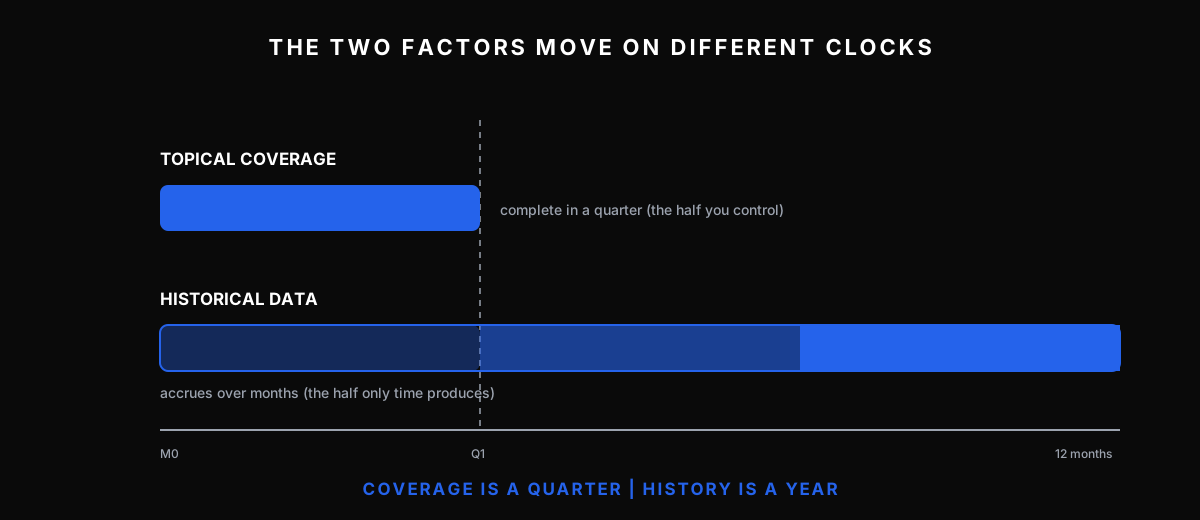
Reading the two clocks correctly is half the discipline. The coverage clock runs in weeks; the history clock runs in months. Operators who quit at the end of the coverage clock never see the second factor pay off, and that is the most expensive misread in the whole methodology.
How Topical Authority Works as a Linguistic System
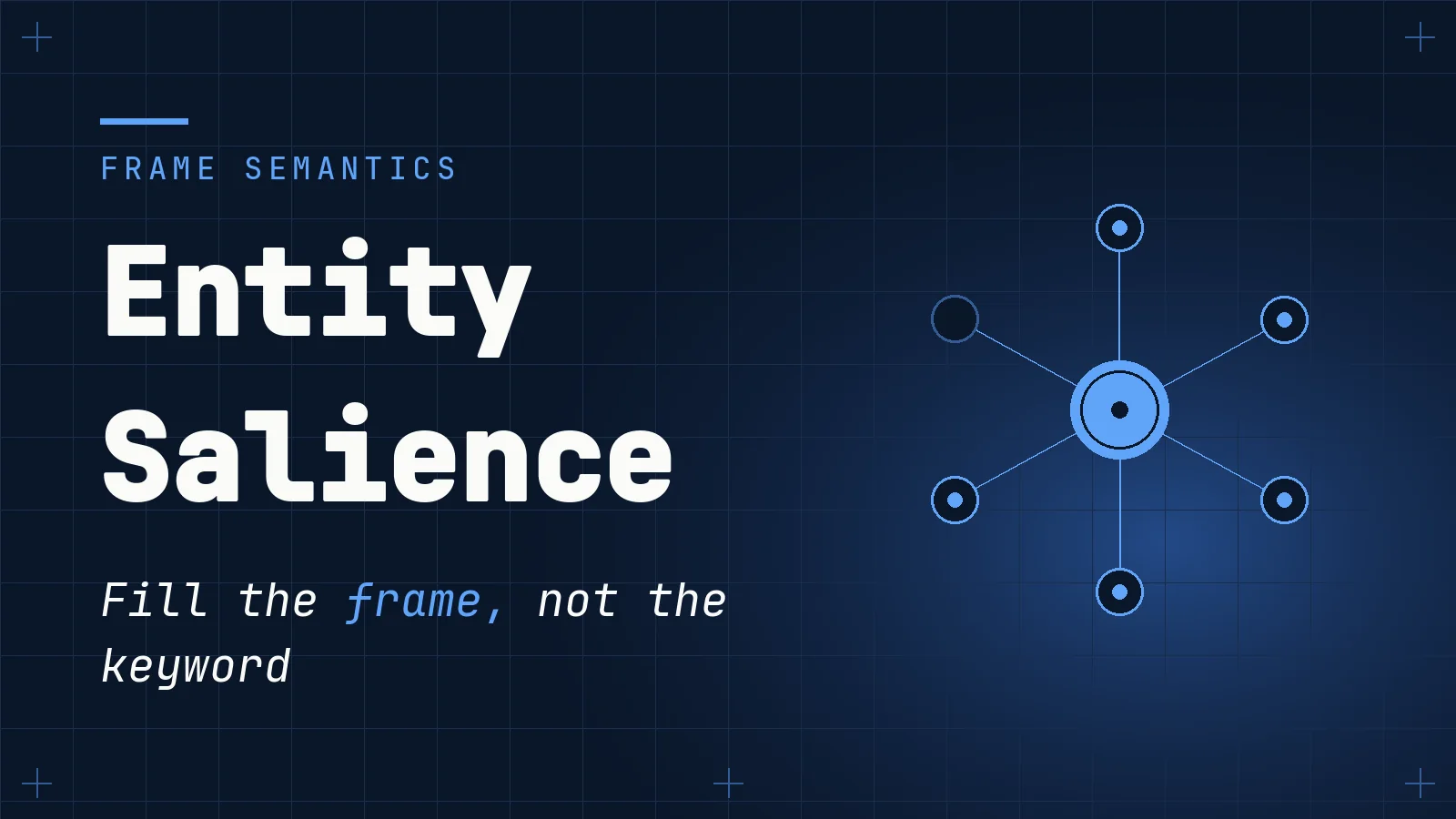
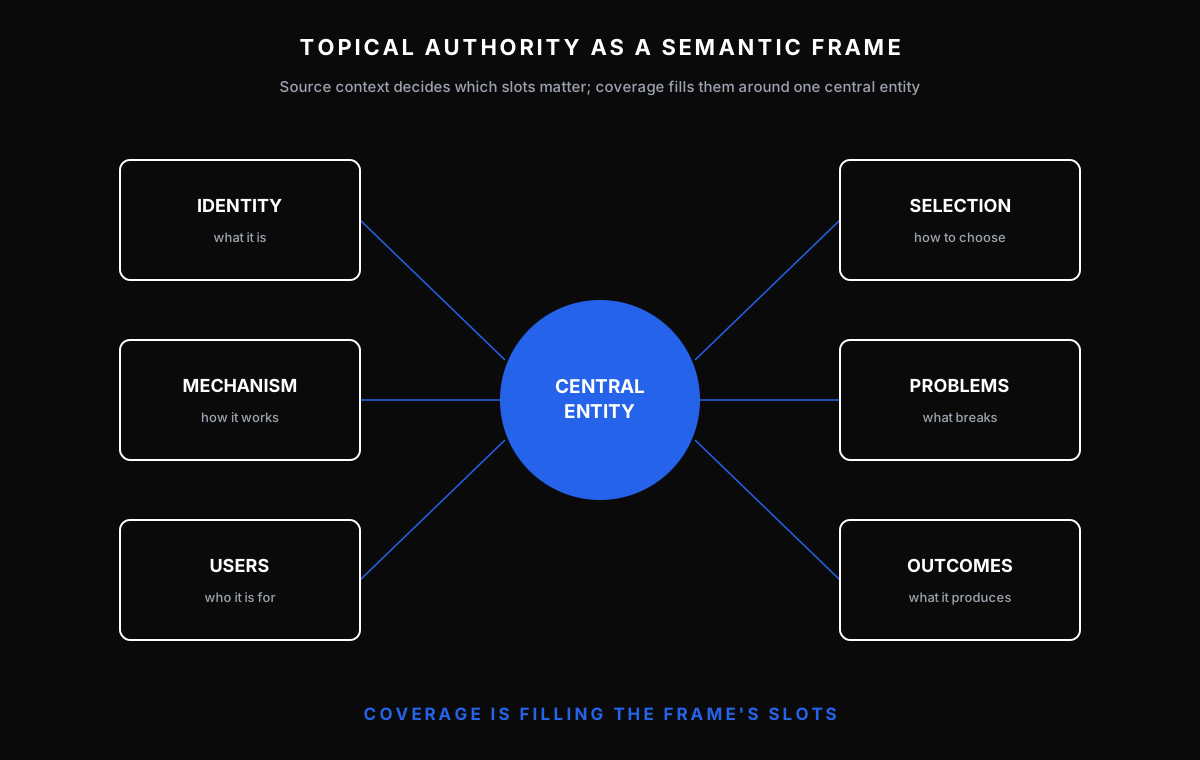
A topic is a semantic frame, and topical authority is built by filling that frame's slots around one central entity, inside one source context. Charles J. Fillmore's frame semantics is the cleanest model for it: every topic evokes a frame, and that frame has slots which expect to be filled.
The Central Entity
The central entity is the thing the whole site is about. For this site, the central entity is me, plus the methodology attached to me. Every page describes either that entity or an attribute of it. When a site has a clear central entity, a search system can resolve what every page is doing relative to that entity. When the central entity is blurry, coverage stops adding up to authority, because the system cannot tell what the coverage is coverage of.
Source Context, The Filter
Source context is the filter. Koray Tuğberk Gübür uses source context to mean a site's reason for existing, including how it earns. Source context decides which attributes of the central entity matter. A site that sells judgment covers different slots than a site that sells software, even on the same topic. Two sites can both write about topical authority and build authority over different parts of it, because their source contexts pull different slots into focus.
Coverage as Slot-Filling
Topical Coverage, in this model, is slot-filling. The query network around a topic is the set of slots the frame expects: what it is, how it works, who it is for, how to choose, what breaks, and what it produces. Those six slots are not arbitrary. They are the frame's structure, and a site that fills them completely reads as authoritative because nothing is left for the frame to expect.
Topic Clusters and The Topical Map
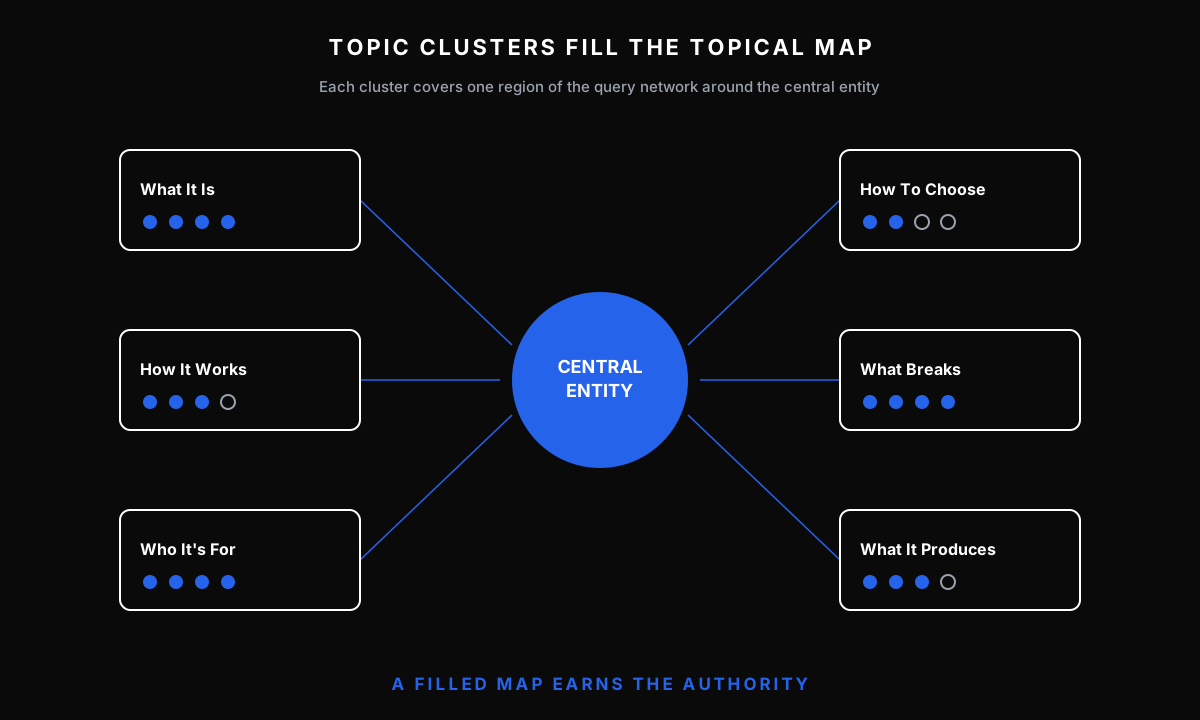
A topic cluster is a group of pages that together cover one region of a topic's query network. A topical map is the plan of that whole network. Topical authority is what a site earns once its clusters fill the map.
The Cluster Is The Unit, The Map Is The Whole
Koray Tuğberk Gübür uses the topical map to mean the blueprint of every query a topic generates, organized into topic clusters around the central entity. The cluster is the unit. The map is the whole. Topical authority is the result of the map being filled with content. The map is not the authority; it is the plan that, once executed, produces it. Confusing the map for the authority is the most common mistake I see, because a beautiful map with empty topic clusters ranks for nothing.
Drawing the map and filling it across hundreds of pages of content is execution, not theory, and it is the kind of topical maps work I run at Mojo Links. What belongs here is the distinction itself: a topical map is a coverage plan, a topic cluster is a coverage unit, and topical authority is the standing that complete coverage earns. Hold those three apart and the methodology stops feeling like jargon.
How Internal Linking Expresses Topical Authority
Internal links are how a site states the relationships between its own pages. Topical authority depends on them because a frame is not only a set of filled slots; it is the slots plus the connections between them. Internal links make those connections legible to a search system.
How The Link Graph Reads Two Sites
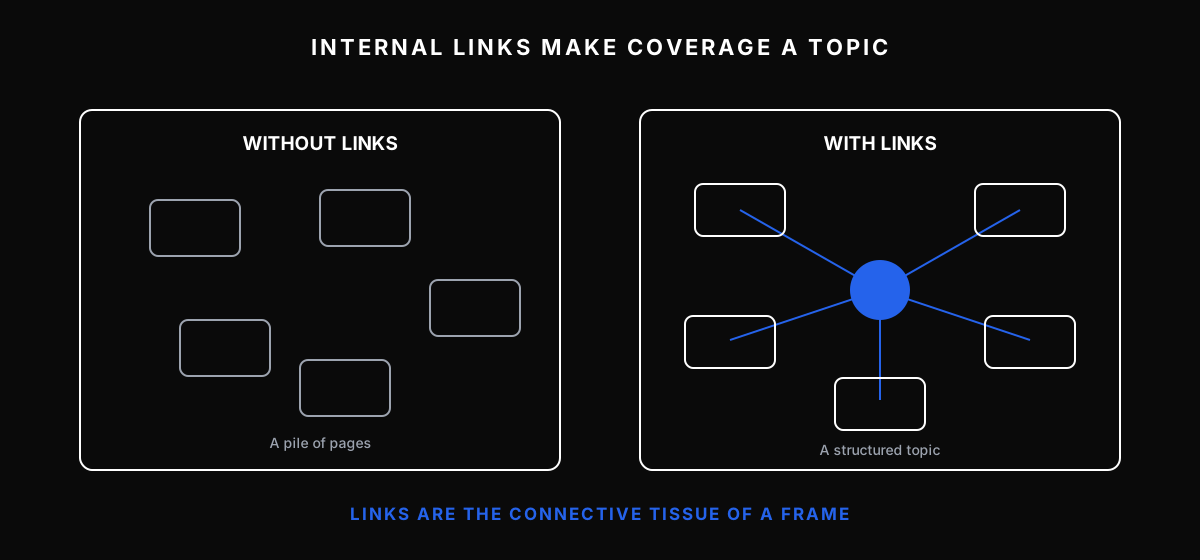
The difference internal linking makes shows up in the link graph. A set of pages with no internal linking is coverage a search engine has to reassemble on its own. The same pages, linked through the central entity, hand the search system the structure for free. This is why two sites with identical content can read very differently: the one that states its own relationships through internal linking reads as a topic, and the one that leaves them implicit reads as a stack of unrelated documents.
An internal link is a referential act, the same way I described it in link relevance. An internal link points from one page to another and, in doing so, asserts that the two share topical territory. A site that links its cluster together through internal linking is telling a search engine how its content is organized. A site whose pages sit unlinked has the coverage but withholds the structure, and structure is half of what authority is made of.
The mechanics of placing those links across a live website, the anchor calibration and the crawl-path discipline, are execution, and they run through Mojo Links. The conceptual point is what matters here: internal links are the connective tissue of a topical frame. Coverage without internal linking reads as a pile of pages. Coverage with it reads as a topic.
How Topical Authority Relates To E-E-A-T
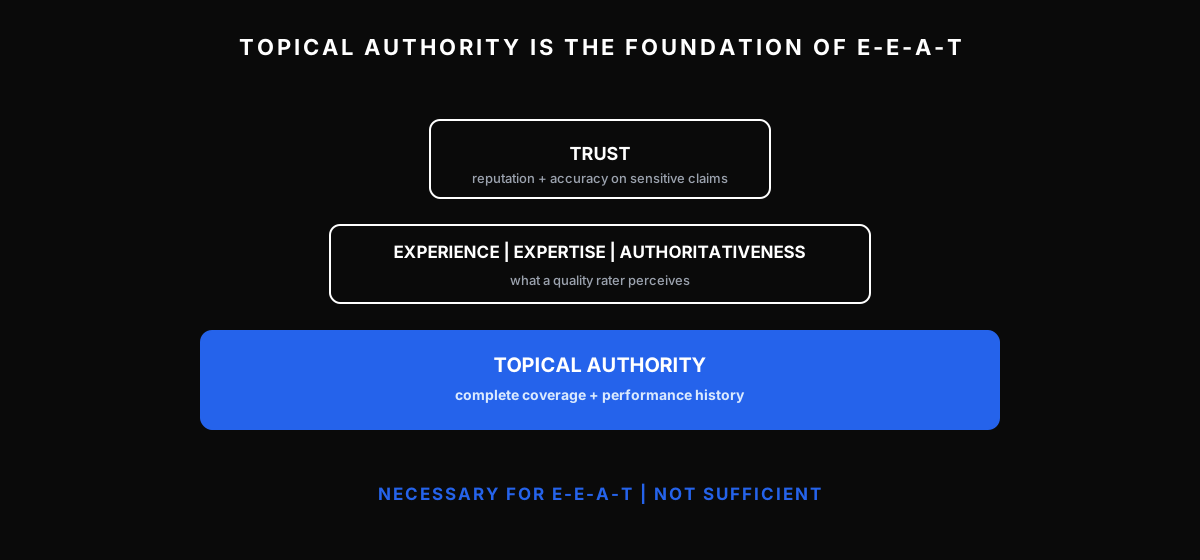
Topical authority and E-E-A-T describe overlapping things from different angles. E-E-A-T, which stands for Experience, Expertise, Authoritativeness, and Trustworthiness, is Google's quality-rater framing of source quality. Topical authority is the structural, coverage-based expression of the same idea.
E-E-A-T Sits on Top of Coverage
I picture E-E-A-T sitting on top of topical authority, not beside it. The coverage and the history are the load-bearing layer. Experience, Expertise, and Authoritativeness are what a rater reads off the content in that layer. Trust adds signals the coverage alone cannot supply. Treating E-E-A-T as a set of on-page boxes to tick gets the order backwards: the foundation comes first, and the perception follows.
E-E-A-T is what a rater perceives. Topical authority is what produces the perception. A site whose content covers a topic completely, with a clear central entity and a history of performing on the topic's queries, is the structural evidence of expertise and authoritativeness a search engine and its raters reward. You do not write E-E-A-T onto a page. You earn it by becoming the source that covers the topic, which is the same thing topical authority measures.
Where Trust Pulls Away
The Trust component is where E-E-A-T and topical authority diverge. Trustworthiness draws on signals beyond coverage, including a site's reputation and its accuracy on sensitive claims. Topical authority is necessary for E-E-A-T and not sufficient for it. A site can hold deep coverage of a topic and still fail Trust on a single claim it gets wrong, which is why I treat topical authority as the foundation E-E-A-T stands on, not a replacement for it.
Why Topical Authority Is Not Domain Authority
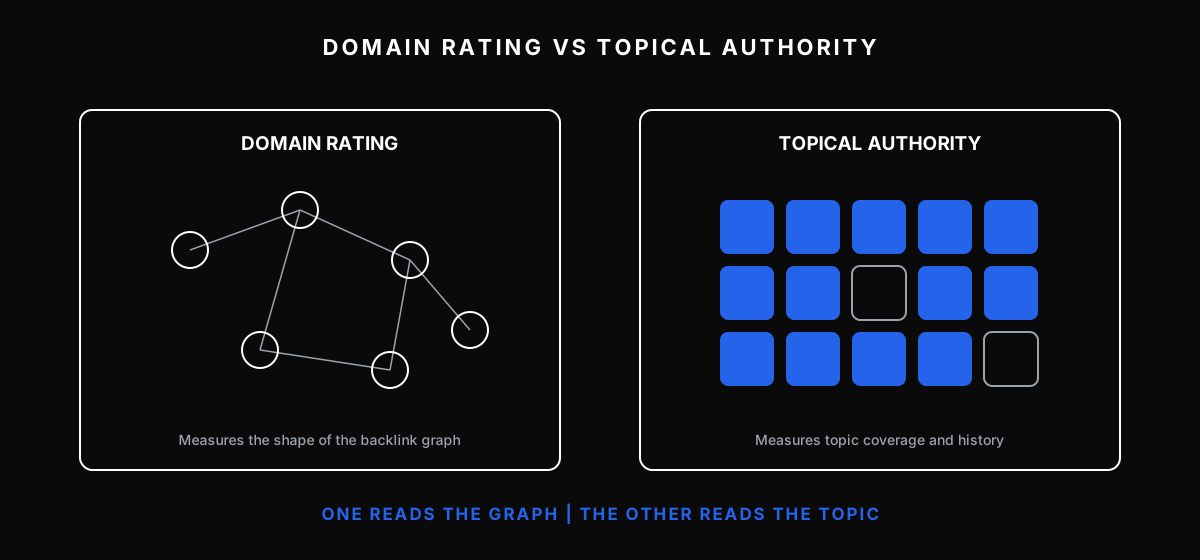
Domain-level link metrics and topical authority measure different things. Domain authority, in the Ahrefs reading, measures the shape and strength of the backlink graph. Topical authority measures coverage of a topic plus historical performance on it. A site can score high on one and low on the other, which is why I never let one SEO metric stand in for the other.
Two Metrics, Two Different Axes
I keep domain authority and topical authority on separate axes deliberately, because each answers a question the other cannot. Ahrefs Domain Rating is a single number that summarizes a graph; topical authority is a shape that summarizes a topic. A site can earn a high Domain Rating and still answer few of a topic's questions inside the search results, and a site can answer nearly all of them while its graph stays thin. The pages that win tight topics in search are almost always the second kind.
What My Own Domain Rating Proves
My own website is the example I reach for first, because it makes the gap concrete rather than theoretical. It carries an Ahrefs Domain Rating in the low teens, which by the link-graph reading is weak. That number says nothing about whether I hold authority over semantic SEO as a topic. The two are orthogonal. One reads the graph; the other reads the topic.
This is the same gap I took apart in link relevance, viewed from the other end. A backlink graph cannot see what a page is about, so it cannot see topical coverage. Domain authority is honest about its own scope; it never claimed to measure topics. The error is SEO operators using a graph metric as a proxy for topical standing, then wondering why high-DR pages lose to focused, lower-DR competitors inside a tight topic in the search results.
Who Earns Topical Authority
Topical authority rewards operators who commit to one topic and cover it completely, regardless of budget. It favors focus over spend. The site owners who earn it are the ones willing to narrow their central entity and publish quality content across a whole frame, rather than chase volume across unrelated topics.
Focus Beats Budget
This is the most level lever available to a small operator, and it is the one I tell every SEO client to pull first. Link budgets scale with money. Topical coverage scales with judgment and the quality content a site is willing to publish over time. I have watched a focused website in a regulated vertical out-rank far larger competitors because it covered its topic while they sprawled across many. Sprintlaw, an Australian legal brand I worked with, is the case I point to most often; I am writing that engagement up separately, so I will keep the claim narrow here.
The same lever suits a personal brand, which is why this site is built around one. My central entity is a person, which forces focus: I cannot credibly cover topics that are not mine without diluting the entity. That constraint is an advantage. It keeps the content tight to one topic, and tight coverage is what authority is made of.
Where Topical Authority Breaks Down
Dilution: Publishing Off The Central Entity
Topical authority breaks down through dilution. The most common failure is publishing content off the central entity: adding pages that do not describe the site's core topic, which teaches a search engine that the site is about many things and therefore authoritative on none. Coverage without focus subtracts, no matter how much content a site ships.
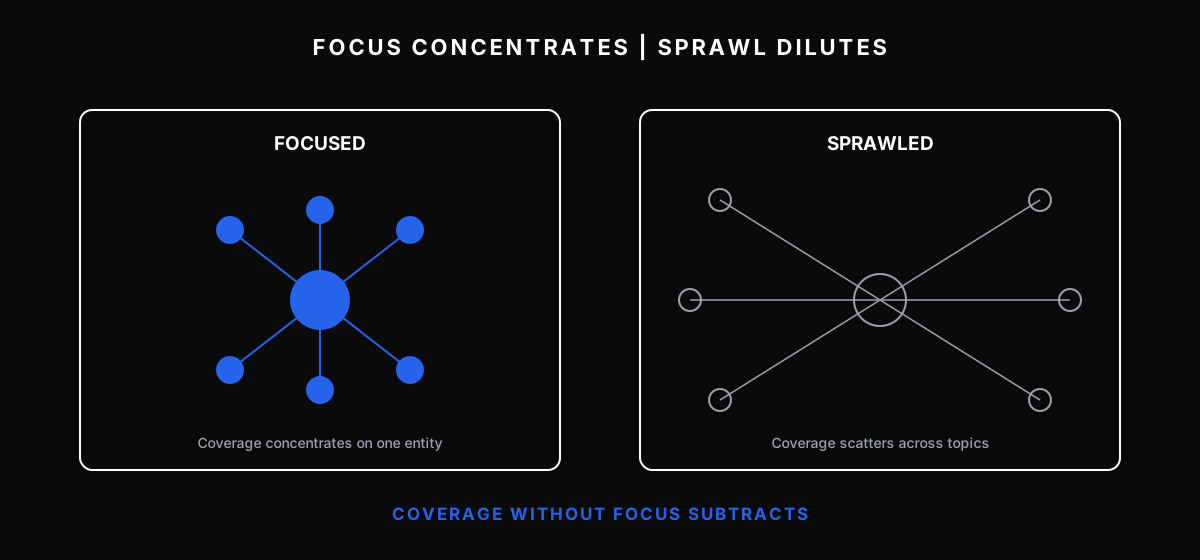
The geometry is the whole point. A focused site points every page back at one central entity, so each page reinforces the others. A sprawled site spends the same effort spraying content across unrelated topics, so the pages reinforce nothing. Same page count, same hours, opposite result. Dilution is not a shortage of work; it is work pointed in too many directions.
Volume Mistaken for Coverage
The second failure is mistaking volume for coverage. Publishing more content on the same narrow slice of a topic does not fill the frame; it stacks redundant signals on slots that are already full while other slots stay empty. I have audited over 200 ranking-drop incidents, and a recurring cause is a site that published a great deal of content and covered very little, because everything it shipped sat in one corner of the frame.
Impatience with The History Factor
The third failure is impatience with the historical-data factor. Coverage can be completed in a quarter; history cannot. SEO operators who finish their coverage and then conclude the methodology failed because rankings in the search engine did not move in six weeks are reading the wrong factor. Historical Data accrues on its own timeline, and authority does not surface until both factors are non-trivial.
What Crossing The Compounding Threshold Produces
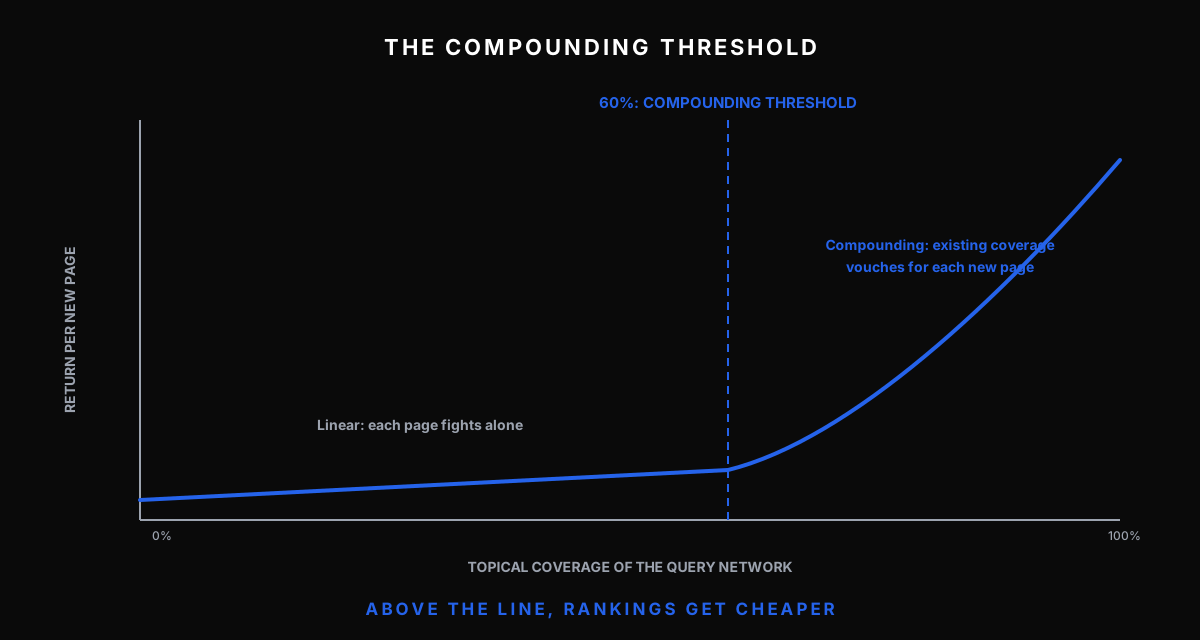
Past a point of coverage, new pages in the same topic rank faster and cheaper than they did before. The compounding threshold is the moment a site's accumulated topical coverage starts lowering the cost of every additional page. In my own work I treat roughly 60% query-network coverage as that line.
The Threshold Where Cost Per Page Drops
Koray Tuğberk Gübür describes a threshold past which authority compounds rather than accruing in a straight line. I will not pin a universal number on it, because the real figure depends on the topic and the competition. In my own SEO engagements I use 60% coverage of the query network as a working line [Bart: confirm preferred figure before publish]. Below it, every page fights for its ranking in search alone. Above it, the site's existing content vouches for each new page, and rankings in the search results arrive at a fraction of the earlier cost.
Eligibility for AI Citation
Topical authority is not the goal itself; it is a lever an SEO strategy decides when to pull.
The second outcome is eligibility for citation in AI search. Retrieval systems prefer sources whose content covers a topic completely, because completeness lowers the risk of citing them. A site past the threshold is not just ranking in classic search; it is becoming the source a model reaches for when the topic comes up. That is the version of authority that matters most as search moves into generative answers and AI search reshapes how people find sources.