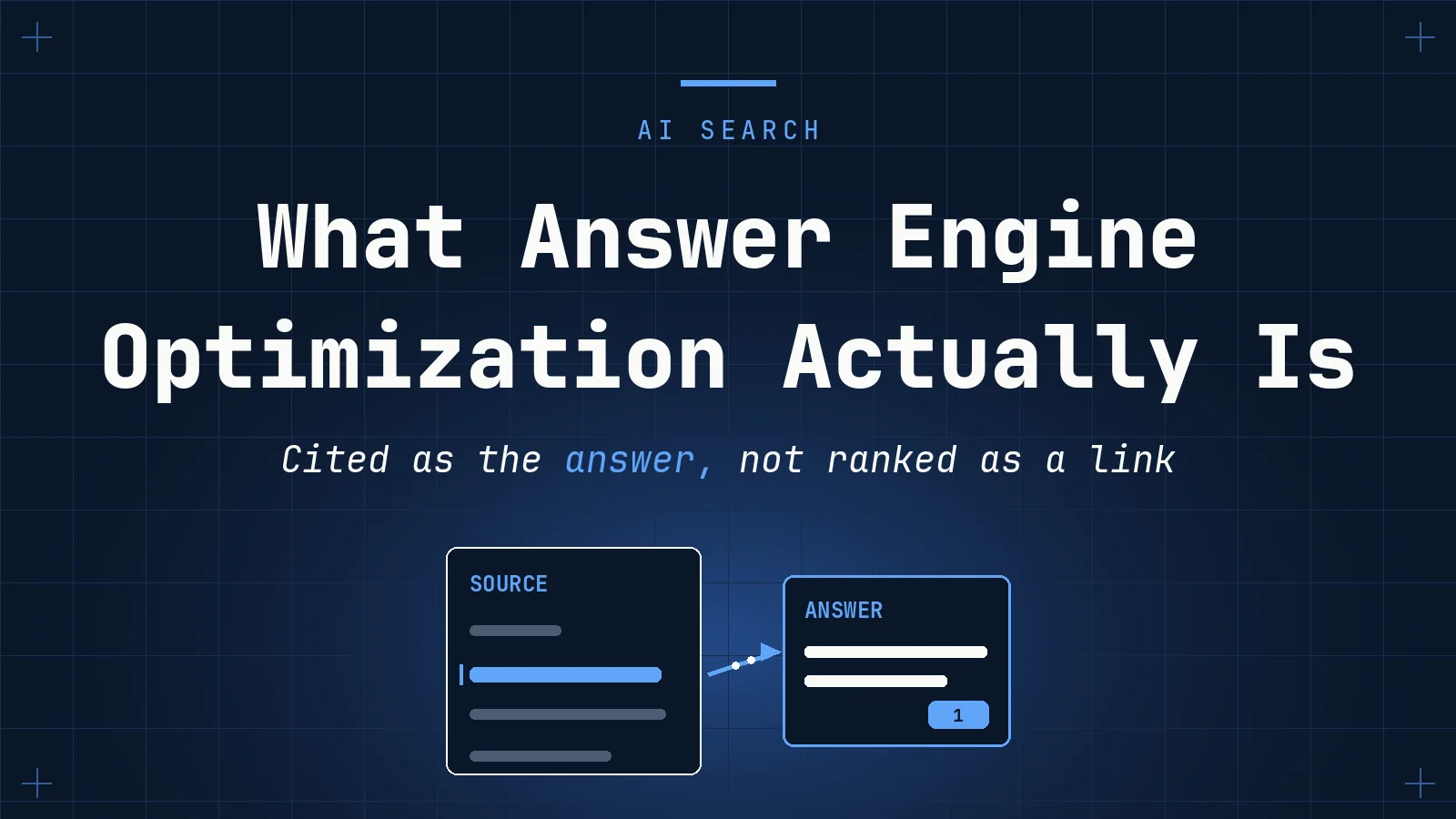
Answer engine optimization is the practice of structuring content so an AI answer engine extracts it and cites it as the answer. I treat a page as a source to be quoted, not a link to be ranked. That single shift - from position to citation - is the whole of AEO, and most of what is sold as a new discipline is semantic SEO I have been doing for years under a different label.
The term gets 4,700 US searches a month and 12,000 globally, and the SERP for it is a wall of definitions that explain what AEO is without ever explaining how an answer engine decides to cite you. That mechanism is the part worth your attention. I trained in linguistics before I trained in SEO, and the citation decision is a retrieval problem with a linguistic core.
What Is Answer Engine Optimization?
Answer engine optimization is the practice of structuring content so AI answer engines extract it and cite it as the answer. AEO optimizes for extraction and citation inside engines like ChatGPT, Perplexity, Gemini, and Google AI Overviews, treating the page as a quotable source rather than a clickable link to be ranked.
The entity is precise. The unit of success is a citation, not a position. The target is an answer engine, defined as a system that returns one synthesized answer with cited sources instead of ten blue links. The optimization object is a passage, not a page. When I describe AEO this way, the difference from classic search is already visible: I am not trying to be the result the user clicks, I am trying to be the sentence the machine reads aloud.
This is why AEO sits in the same family as semantic SEO. Both care about entities, relationships, and machine-readable meaning. AEO just moves the finish line from the result page into the generated answer. The shift is not cosmetic. A ranked link competes for a click; a cited source competes to be the answer itself, which is a higher bar and a more durable one.
How Do Answer Engines Choose What To Cite?
Answer engines retrieve candidate passages, score each for relevance and extractability, then cite the sources whose statements are clearest and most consensus-aligned. Selection rewards unambiguous entities and self-contained answers. It does not reward keyword density or raw backlink volume the way a classic ranking algorithm once did.
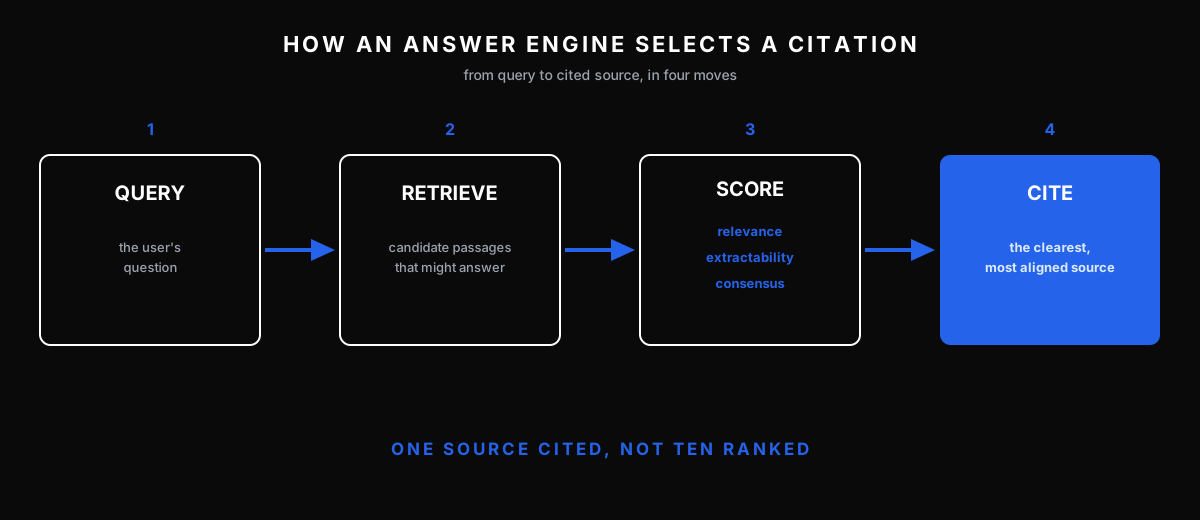
The pipeline has four moves. The engine retrieves a set of candidate passages that might answer the query. It scores each one for relevance to the question and for extractability - whether the passage stands on its own when lifted out of the page. It checks the claim against what other sources say, because a model trusts a statement more when it agrees with the consensus. Then it cites the passage that wins on all three.
An extractive answer is a self-contained passage an engine can quote verbatim, one that answers the question in its first sentence with no surrounding context required. That property is the single highest-leverage thing in AEO. A page can be authoritative and still go uncited because its answer is buried in the third paragraph, wrapped in qualifiers the engine cannot lift cleanly. Retrieval runs on semantic similarity, so the passage also has to mean what the query means, not merely share its words.
This is also where keyword thinking dies. The engine is not matching a string; it is resolving an entity and a question. A page that names its entities clearly and answers direct questions in direct sentences gives the model clean material to quote. A page that hedges, buries, and pads gives it nothing liftable, no matter how much traffic that page once earned.
How Is AEO Different from GEO and SEO?
AEO optimizes to be cited as the answer, GEO optimizes to be blended into a generated synthesis, and SEO optimizes to rank as a clickable link. The three share one substrate: a machine deciding which sources best resolve a query. The destination differs, but the signals that win all three overlap heavily.
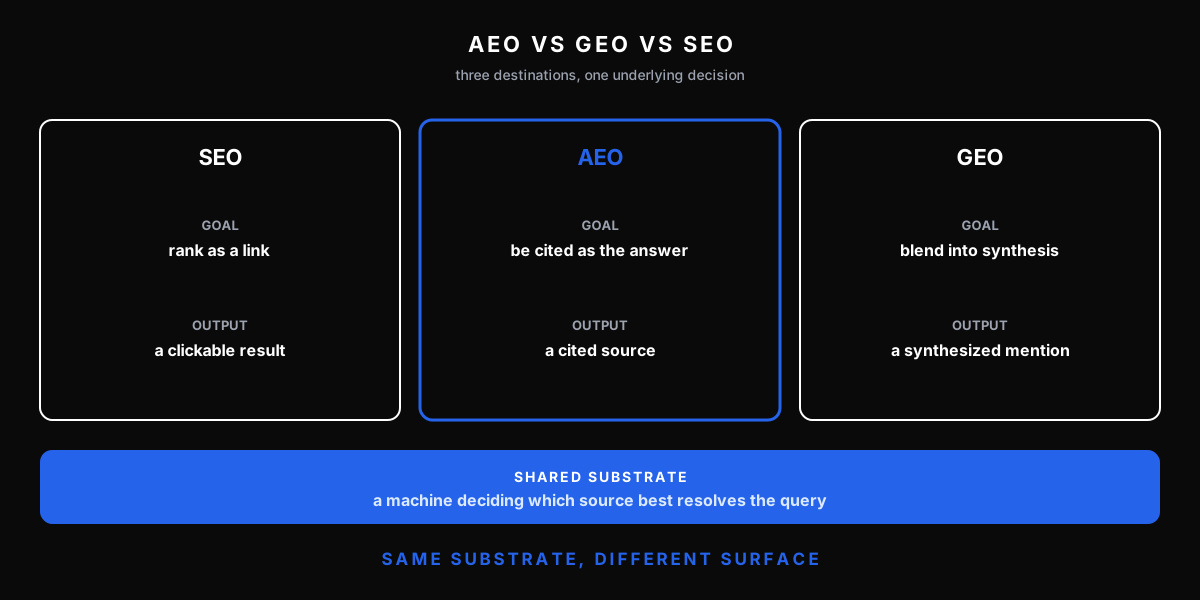
The difference between AEO and GEO is narrow and mostly about surface. Generative engine optimization, a term with 28,000 global searches, targets inclusion in the synthesized paragraph a model generates. AEO targets the explicit citation an answer engine attaches to that paragraph. In practice the same page often wins both, because the passage clear enough to be cited is also the passage clean enough to be synthesized.
Does AEO replace SEO? No. AEO is not a replacement for search optimization, it is a new output of the same inputs. The entities you make clear, the answers you make extractable, and the authority you build still decide whether a machine trusts you. I optimize once, for meaning, and let that work surface as a ranked link, a citation, or a synthesized mention depending on where the user is searching.
The marketing language muddies this. Some sell AEO and GEO as rival strategies that need separate budgets. They are not rival strategies. They are three views of one decision a machine makes, and a single well-structured page is the asset that wins across all three surfaces at once.
How Do Structured Data and Schema Markup Fit In?
Structured data and schema markup make a page machine-legible, which raises the odds an answer engine can identify the entity and lift a clean answer. Schema does not buy a citation outright, but it removes ambiguity about what the page is, who wrote it, and which passage answers which question.
I think of structured data as labeling the content for a parser that is in a hurry. FAQ schema marks a question and its direct answer as a unit. Article schema names the author and the topic. Organization schema ties the page to a known entity rather than an anonymous site. None of this rewrites the prose, and none of it rescues a thin page, but it lowers the retrieval cost of understanding a good one.
The mistake is treating schema markup as the strategy instead of the scaffolding. An answer engine still has to find a clear, extractable, consensus-aligned answer in the body. Structured data makes that answer easier to locate and attribute; it cannot manufacture one. A page with perfect markup and vague content stays uncited, while a clearly written page with modest markup gets quoted.
Which Answer Engines Does AEO Target?
AEO targets every system that returns a synthesized answer with cited sources: ChatGPT, Perplexity, Google AI Overviews, Gemini, Copilot, and the voice assistants built on them. Each retrieves and cites passages, so one extractable, entity-clear page earns visibility across all of them rather than one engine at a time.
The engines differ in surface, not in appetite. Perplexity foregrounds its citations as numbered sources. Google AI Overviews fold them into a panel above the classic results. ChatGPT cites when it browses and paraphrases when it does not. Voice assistants read a single answer aloud, which is the most extractive surface of all because there is no room for a list. Across every one of them, the question is the same: is your passage the cleanest available answer to this query.
This is why I do not optimize per engine. Chasing one assistant's quirks is the AEO equivalent of writing for a single ranking factor. The durable move is to be the most quotable source on the topic, because that property travels. A page that ChatGPT cites is usually the page Perplexity cites and the page an AI Overview pulls, for the same reason: it answers the question directly and backs the answer with demonstrable authority.
Who Needs Answer Engine Optimization?
Operators whose buyers now ask an answer engine instead of scanning ten blue links need AEO. It matters most where a purchase decision starts as a question an answer engine resolves before the user ever reaches a website, which is an expanding share of commercial research.
I do not frame AEO as a tactic for a vertical. It is a response to a behavior change. When a buyer asks an assistant "which tool does X" and reads the synthesized answer, the brands cited in that answer get considered and the rest do not exist for that query. If your category is one people now research through an answer engine, you need to be a citable source in it. If your buyers still type and click, AEO is a hedge rather than an emergency.
The stakes are sharpest for brand discovery. An answer engine that never cites you is shaping your prospect's shortlist without you in it, and you will not see the lost demand in any traffic report because the click never happened. This is the same audience that already cares about topical authority, because the sources answer engines trust are the ones with demonstrated depth on a topic, not a single thin page chasing the term.
What Does Answer Engine Optimization Actually Require?
AEO requires four things: passages an engine can extract cleanly, entities named without ambiguity, claims that align with consensus, and demonstrable authority. These are properties of the content itself. They are not a checklist of tricks applied on top of a page after it is written.
Extractable passages come first. I write the answer in the first sentence under a heading, self-contained, around 40 words, so an engine can lift it without repair. Entity clarity comes second. I name the entity explicitly and consistently rather than leaning on pronouns, because an engine that cannot resolve what "it" refers to will not cite the sentence. Consensus alignment comes third. I state claims the way the broader literature states them, and where I disagree I mark the disagreement as mine rather than smuggling it in as fact. Authority comes fourth, and it is the slowest to build.
None of these are new. Each one is a thing I was already doing to win featured snippets and entity coverage. AEO did not invent the requirements. It raised the stakes on getting them right, because an answer engine shows one source where a result page showed ten. The penalty for a vague page used to be a lower rank. The penalty now is invisibility.
How Do You Measure AI Visibility?
AI visibility is measured in citation share and mention share across answer engines, not in rank position or raw traffic. The question shifts from "where do I rank for this keyword" to "how often, and how favorably, does an answer engine cite my brand when it resolves this query."
The metrics that matter are new in name and familiar in spirit. Citation share is the percentage of relevant answers that quote you. Mention share counts the answers that name your brand even without a link. Answer presence tracks whether you appear at all for a prompt set you care about. Sentiment captures whether the mention helps or hurts. I track these across ChatGPT, Perplexity, and Google AI Overviews, because a brand can dominate one engine and be absent from another.
Traffic stops being the headline number. An answer engine can resolve a query, cite you, and send no click, which means a visibility win and a flat analytics dashboard can happen at the same time. That decoupling breaks the old reporting reflex, and it is the measurement problem I built Semapoly to handle: tracking where a brand is cited across engines rather than only what lands on the site.
Why Do Authoritative Sources Win Citations?
Authoritative sources win citations because an answer engine, like a careful writer, prefers to quote the source it can stand behind. Demonstrated expertise, first-hand experience, and consistency with the wider record all raise the odds that a model treats your passage as the safe one to cite.
This is the experience-and-expertise idea that search has rewarded for years, now applied to citation rather than ranking. A page written by a named expert, consistent with consensus, and corroborated by other respected sources is a lower-risk quote for a model that does not want to be wrong. An anonymous page making a novel claim with no corroboration is a high-risk quote, so it gets passed over even when its answer is technically correct.
Authority is also why brand and entity strength compound here. The more often a respected source is cited on a topic, the more the topic and the source become associated in the model's representation, and the more it gets cited next time. That is the same compounding I see in link relevance and authority: relevance and trust are linguistic properties a machine reads, and a citation is a trust decision dressed as a quote.
Why Is AEO Mostly Semantic SEO with a New Name?
AEO is mostly semantic SEO renamed because its requirements - clear entities, extractable answers, consensus alignment, topical authority - are exactly what semantic SEO has demanded for years. The answer surface is genuinely new. The discipline that earns a place on it is the one Koray Tuğberk Gübür has been teaching the whole time.
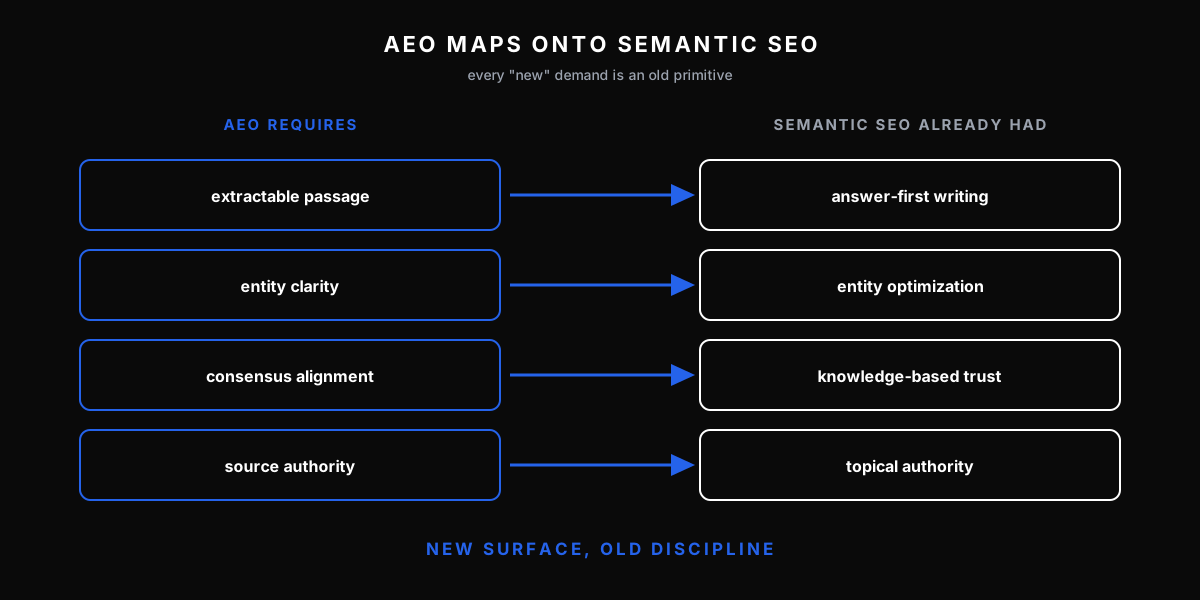
Map the AEO requirements onto their semantic-SEO primitives and the overlap is near total. Extractable passages are answer-first writing. Entity clarity is entity optimization. Consensus alignment is the knowledge-based-trust idea. Authority is topical authority. Schema markup is the structured-data work semantic SEO has always recommended. I did not learn a new craft when answer engines arrived. I pointed an existing craft at a new output.
This is also why I distrust the loudest AEO advice. Most of it repackages 2019 semantic-SEO guidance as a 2026 discovery and charges for the relabel. The honest version is simpler: if your entities are clear, your answers extractable, and your authority real, you are already optimized for answer engines. The new vocabulary sells courses; the old discipline wins citations.
What Does AEO Change, and What Stays The Same?
AEO changes the destination: visibility now means being cited inside an answer rather than ranked above it. What stays the same is the foundation. Entity clarity, relevance, and authority still decide which sources a machine trusts to answer a query, exactly as they decided which pages a machine ranked.
What changes is real and worth naming. The click is no longer guaranteed, because the answer engine may resolve the query without sending traffic. The winner-take-most dynamic sharpens, because one cited source beats nine uncited ones. Measurement moves from position tracking to citation and mention share. The unit of competition shrinks from the page to the passage, and the surface expands from one results page to every assistant a buyer might ask.
What stays the same is the part people keep hoping has changed. There is no shortcut that skips meaning. An answer engine is a more demanding reader than a ranking algorithm, not a more gameable one. I optimize for the reader and the machine at once, because for the first time they want the same thing: a clear, true, self-contained answer. When I want this done at scale for a brand rather than a single page, that is what Mojo Links is built to run.
Frequently Asked Questions About Answer Engine Optimization
What Is Answer Engine Optimization in One Sentence?
Answer engine optimization is structuring content so AI answer engines extract it and cite it as the answer, optimizing for citation inside engines like ChatGPT and Google AI Overviews rather than for position on a results page.
Is AEO The Same as GEO?
AEO and GEO overlap heavily but differ in target. AEO optimizes to be cited as the explicit answer, while generative engine optimization targets inclusion in the synthesized paragraph a model generates. The same well-structured page usually wins both.
Does AEO Replace SEO?
No. AEO does not replace SEO, it is a new output of the same inputs. Clear entities, extractable answers, and real authority still decide whether a machine trusts your content, whether the output is a ranked link or a citation.
Does AEO Require Schema Markup?
Schema markup helps but does not replace good content. Structured data makes a page machine-legible so an answer engine can identify the entity and lift a clean answer, yet it cannot manufacture an answer a vague page never made.
How Do You Measure AEO Success?
You measure AEO in citation share and mention share across answer engines, plus answer presence and sentiment, rather than in keyword rank or raw traffic. A brand can win visibility in an answer while sending no click to the site.
Which Answer Engines Does AEO Target?
AEO targets the systems that return synthesized answers with cited sources: ChatGPT, Perplexity, Google AI Overviews, Gemini, and Copilot. Each retrieves and cites passages, so the same extractable, entity-clear writing earns visibility across all of them.